What Does Homeowners Insurance Cover?

What Does Homeowners Insurance Cover

Homeowners insurance covers damage to your home from fire, heavy wind, and other disasters.

Nerdy takeaways
    • Homeowners insurance provides coverage in case a disaster damages your home or personal belongings.
    • It can also pay out if you’re held responsible for an accident or injury.
    • Home insurance generally covers damage due to fire, wind or snow, but it won’t cover floods or earthquakes.

Your home is more than just a roof over your head. It may be your most valuable asset — and one you likely can’t afford to replace out of pocket if disaster strikes. That’s why protecting your place with the right homeowner’s insurance is important.

What does homeowners insurance cover?

Homeowners insurance covers your house and belongings in case of events such as fires, hail, tornadoes, and burst pipes. If one of these scenarios damages your home, your policy can pay to repair it. Homeowners insurance can also reimburse you for theft or vandalism of your belongings.

But a homeowners policy doesn’t just cover your house and your stuff. It can also pay to defend you from lawsuits or cover medical bills for someone who gets hurt on your property. And if you can’t live at home after a covered disaster, your homeowner’s policy could pick up the tab for a hotel or rental apartment.

The 6 standard types of home insurance coverage

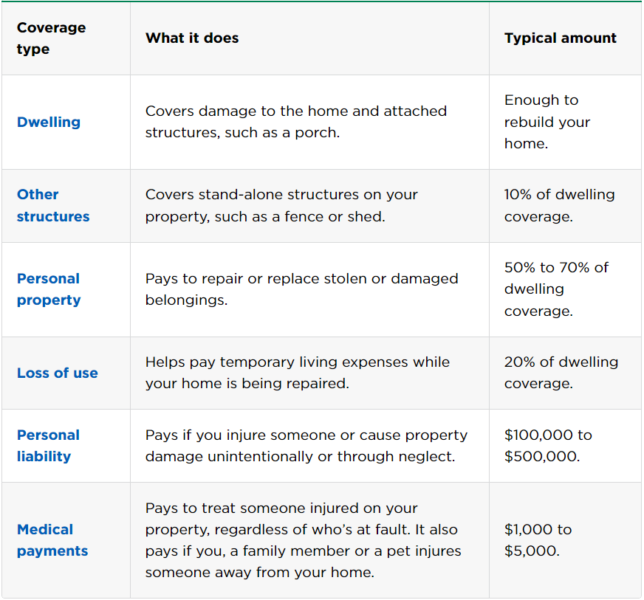
Standard homeowners insurance policies generally include these six types of coverage:

What Does Homeowners Insurance Cover

Dwelling coverage

Dwelling coverage covers the structure of your home, including the walls, floors, windows, and roof. Built-in appliances, such as furnaces, are typically included in your dwelling coverage. An attached garage, porch, or deck would fall under your dwelling coverage, too.

Which events are covered: Most homeowner’s policies cover your dwelling for any cause of damage that isn’t specifically excluded. According to the Insurance Information Institute, some of the most common causes of homeowners insurance claims include wind, hail, freezing, fire, and lightning.

How it works: A severe thunderstorm uproots a tree that falls onto your home, crushing part of the roof and attic. You’d pay your share of the repair cost — known as the homeowners insurance deductible — and then the insurer would pay the rest, up to your dwelling coverage limit.

Other structures coverage

Just like it sounds, other structures coverage provides insurance for structures on your property that aren’t attached to your house. That could include a shed, fence, or detached garage.

Which events are covered: As with dwelling coverage, most homeowners insurance policies cover other structures for any event that isn’t specifically excluded. That means you’d likely have coverage for fire, wind, hail, and snow, among other issues.

How it works: Part of your fence collapses under the weight of heavy snow. The insurance company would pay to repair it, minus your deductible.

Personal property coverage

Personal property refers to your personal belongings — like clothes, furniture, electronic devices, and appliances that aren’t built in. Most homeowners’ policies cover these items anywhere, not just inside your house. So if someone steals your bike from outside a store, it’ll likely be covered (minus your deductible).

Which events are covered: In most homeowner’s policies, personal property coverage works differently than dwelling and other structures coverage. Instead of covering your belongings for anything that isn’t specifically excluded, homeowner’s policies often cover only disasters that are listed.

These events, typically called “perils” in your policy, tend to include:

    • Fire or lightning.
    • Smoke.
    • Windstorms and hail.
    • Explosions.
    • Theft.
    • Vandalism.
    • Weight of ice, snow, and sleet.
    • Sudden damage from a power surge.
    • Volcanic eruptions.
    • Falling objects.
    • Water overflow or discharge from household systems like plumbing, air conditioning, and appliances.
    • Freezing of those same household systems.
    • Sudden tearing, cracking, or bulging of a hot water system, steam system, air conditioning, or fire protective system.
    • Riots.
    • Damage from aircraft or vehicles.

How it works: A pipe bursts on a frigid winter night, sending water cascading into your kitchen and dining room. Although dwelling coverage would pay for damage to built-in items such as cabinets, personal property coverage would take care of ruined furniture, minus your deductible.

Loss of use coverage

Sometimes called “additional living expenses,” the loss of use a section of your homeowner’s policy can come in handy if your home is too damaged to live in. Loss of use coverage may pay for hotel stays, restaurant meals, or other expenses associated with living somewhere else if your home is uninhabitable after a disaster your policy covers.

Which events are covered: As long as your home is undergoing repairs for a covered claim, you’ll likely be eligible for loss of use coverage. But if your home’s damage is from a disaster that isn’t covered — such as a flood — your insurer won’t pay your additional living expenses, either.

How it works: After a kitchen fire spreads to your living room, your home is out of commission for a few months while contractors make repairs. Your insurance company would pay for you and your family to rent a similarly sized house nearby.

Liability coverage

Personal liability coverage offers financial help if you’re responsible for injuring someone or damaging their property. Coverage generally extends to anyone in your household, including pets — so if your dog bites someone at the park, you may have coverage. (See Does Homeowners Insurance Cover Dog Bites? for more information.)

Which events are covered: Liability insurance covers bodily injury and property damage to others, with some exceptions. For instance, your policy won’t cover criminal acts or harm you cause on purpose. Nor will it pay for injuries or damage from a car accident (your liability car insurance would cover those).

How it works: A delivery person slips on your icy sidewalk before you can salt it. He breaks his wrist in the fall and sues you for medical bills and lost wages. Your liability coverage could pay your legal fees, plus any damages you’re responsible for in the lawsuit, up to your policy limit.

Medical payments coverage

Like liability coverage, medical payments coverage pays if you cause physical injury to someone outside your household. However, you don’t need to be found at fault for medical payment coverage to pay out.

Which events are covered: You could tap your medical payments coverage if someone suffers a minor injury on your property or you cause harm to someone outside your home. Similar restrictions apply to liability and medical payments, with no coverage for intentional acts or car accidents, among other exclusions.

How it works: Your dog bites the hand of a visiting friend. There’s no serious harm, but your medical payments insurance covers the cost of their trip to urgent care for stitches.

What homeowners insurance won’t cover

Even the broadest homeowners insurance policy won’t cover everything that could go wrong with your home. For example, you can’t intentionally damage your house and then expect your insurer to pay for it. Policies also typically exclude damage from other causes such as:

    • Flooding from external sources like heavy rainfall or storm surges.
    • Drain and sewer backups.
    • Earthquakes, landslides, and sinkholes.
    • Infestations by birds, vermin, fungus, or mold.
    • Wear and tear or neglect.
    • Nuclear hazard.
    • Government action, including war.
    • Power failure.

However, you can buy separate coverage for some of these risks. Flood insurance and earthquake insurance are available separately, and in hurricane-prone states, you may need or want windstorm insurance.

Expand your coverage with endorsements

Talk to your insurer if you have concerns about problems your policy doesn’t cover. In many cases, you can add endorsements — which usually cost extra — that offer more coverage.

Below are a few of the most common home insurance endorsements. Note that availability may vary by state and company.

Scheduled personal property covers a specific valuable item such as a ring or musical instrument. You may need an appraisal — a document that states the value of the item — to get this coverage.

Ordinance or law coverage pays to bring your home up to current building codes during repairs or rebuilding.

Water backup coverage pays for damage due to backed-up sewer lines, drains, or sump pumps.

Equipment breakdown coverage pays for heating, ventilation, and air conditioning, or HVAC, systems, and large appliances if they stop working for reasons other than normal wear and tear.

Service line protection pays for damage to water, electricity, or other utility lines that you’re responsible for.

Identity fraud coverage pays expenses associated with identity theft such as lost wages and legal fees.

Does homeowners insurance cover …?

This table shows common problems and whether your homeowner’s insurance policy will cover them.

Problem

Covered?

Details

Dog bites

Usually.

Your liability coverage typically covers expenses if your dog bites someone outside your household. See Does Homeowners Insurance Cover Dog Bites?

Fallen tree

Maybe.

If a covered event knocks a tree onto your home, your policy will probably pay to remove it. But if the tree simply falls on your lawn, you’re on your own. Learn more about home insurance and tree removal.

Fire

Usually.

Fire is one of the standard perils most homeowners insurance policies cover. Learn about home insurance and wildfires.

HVAC problems

Maybe.

If a covered event such as a windstorm damages your heating or cooling system, your homeowner’s policy would likely pay to repair it. Adding an equipment breakdown endorsement to your policy could give you additional coverage for mechanical failures. However, homeowners insurance won’t pay for normal wear and tear. Learn more about homeowners insurance and AC units.

Lost jewelry

Usually not.

A standard homeowners insurance policy covers jewelry only for theft, fire or other named events, not for accidental loss. That’s why it’s a good idea to add broader coverage for valuable jewelry. Learn more about jewelry insurance.

Mold

Maybe.

It depends on the cause of the mold. Most insurers will cover mold only if it’s caused by a covered problem such as a burst pipe. Learn more about homeowners insurance and mold.

Plumbing

Maybe.

Damage from sudden, accidental leaks may be covered, but slow leaks that develop over time generally won’t be. (The latter are considered a maintenance issue.) See Does Homeowners Insurance Cover Plumbing Problems?

Roof leaks

Maybe.

It depends on why your roof is leaking. Insurance typically covers damage due to a sudden, accidental event such as hail or wind, but it won’t cover simple wear and tear. Learn more about homeowners insurance and roof leaks.

Termite damage

Usually not.

Insurance companies generally consider dealing with infestations to be a part of regular home maintenance, which they don’t cover. Learn more about homeowners insurance and termite damage.

Water damage

Maybe.

It depends on the type of water damage. Most home insurance policies won’t cover floods, for example. They won’t cover damage from a backed-up drain or sewer unless you’ve paid for that endorsement. But if a pipe freezes and bursts, your insurer will typically pay for the resulting damage. To learn more, see Does Homeowners Insurance Cover Water Damage?

Types of homeowners insurance policies

Homeowners insurance comes in several types, called “policy forms.” Some types have more expansive coverage than others, so it’s worthwhile to know the difference. Note that different insurance companies may have different names for these policies.

Most popular: HO-3 insurance

HO-3 insurance policies, also called “special form,” are the most common. If you have a mortgage, your lender is likely to require at least this level of coverage.

HO-3 insurance policies generally cover damage to your home from any cause except those the policy specifically excludes, such as an earthquake or a flood. However, where it concerns your belongings, HO-3 insurance typically covers only damage from the perils listed in your policy.

Broadest coverage: HO-5 insurance

An HO-5 insurance policy offers the most extensive homeowners coverage. It pays for damage to your home and belongings from all causes except those the policy excludes. It’s typically available only for well-maintained homes in low-risk areas, and not all insurers offer it.

Limited coverage: HO-1 and HO-2 insurance

Much less popular are HO-1 and HO-2 homeowners insurance, which pay only for damage caused by events listed in the policy.

Other policy types include HO-4 insurance for renters, HO-6 for condo owners, HO-7 for mobile homes, and HO-8 — a rarely used type that provides limited coverage for older homes.

How homeowners insurance works

If your home is destroyed, your homeowner’s insurance company isn’t likely to simply write you a check for the amount listed on your policy. First, you’ll have to file a claim, documenting the damage. And your payout could vary depending on your coverage and deductibles.

Replacement cost vs. actual cash value

One key factor in your payout is whether your coverage will pay whatever it takes to rebuild your home, even if that cost is above your policy limits. This situation may arise, for instance, if construction costs have increased in your area while your coverage limits haven’t changed. Here’s a rundown of several options you may encounter.

Actual cash value coverage pays the cost to repair or replace your damaged property, minus a depreciation deduction. Most policies don’t use this method for the house, but it’s common for personal belongings. For items that are several years old, this means you’ll probably get only a fraction of what it would cost to buy new ones. Learn more about actual cash value coverage.

Functional replacement cost coverage pays to fix your home with materials that are similar but possibly cheaper. For example, your contractor could replace damaged plaster walls with less expensive drywall.

Replacement cost coverage pays to repair your home with materials of “like kind and quality,” so plaster walls can be replaced with plaster. However, the payout won’t go above your policy’s dwelling coverage limits.

Some policies offer replacement cost coverage for personal items. This means the insurer would pay to replace your old belongings with new ones, with no deduction for depreciation. If this feature is important to you, check the policy details before you buy. It’s a common option, but you typically need to pay more for it. Learn more about replacement cost coverage.

Extended replacement cost coverage will pay more than the face value of your dwelling coverage, up to a specified limit, if that’s what it takes to fix your home. The limit can be a dollar amount or a percentage, such as 25% above your dwelling coverage amount. This gives you a cushion if rebuilding is more expensive than you expected.

Guaranteed replacement cost coverage pays the full cost to repair or replace your home after a covered loss, even if it goes above your policy limits. Not all insurance companies offer this level of coverage.

Homeowners insurance deductibles

Homeowners’ policies typically include a deductible — the amount you must cover before your insurer starts paying. The deductible can be:

  • A flat dollar amount, such as $500 or $1,000.
  • A percentage, such as 1% or 2% of the home’s insured value.

When you receive a claim check, your insurer subtracts your deductible amount. Say you have a $1,000 deductible and your insurer approves a claim for $10,000 in repairs. The insurer would pay $9,000, and you would be responsible for $1,000.

Be aware that some policies include separate — and often higher — deductibles for specific types of claims such as damage from wind, hail, hurricanes or earthquakes. For example, a policy might have a $1,000 deductible for most losses but a 10% deductible for optional earthquake coverage. This means if an earthquake damages a home with $300,000 worth of dwelling coverage, the deductible would be $30,000.

Liability claims generally don’t have a deductible.

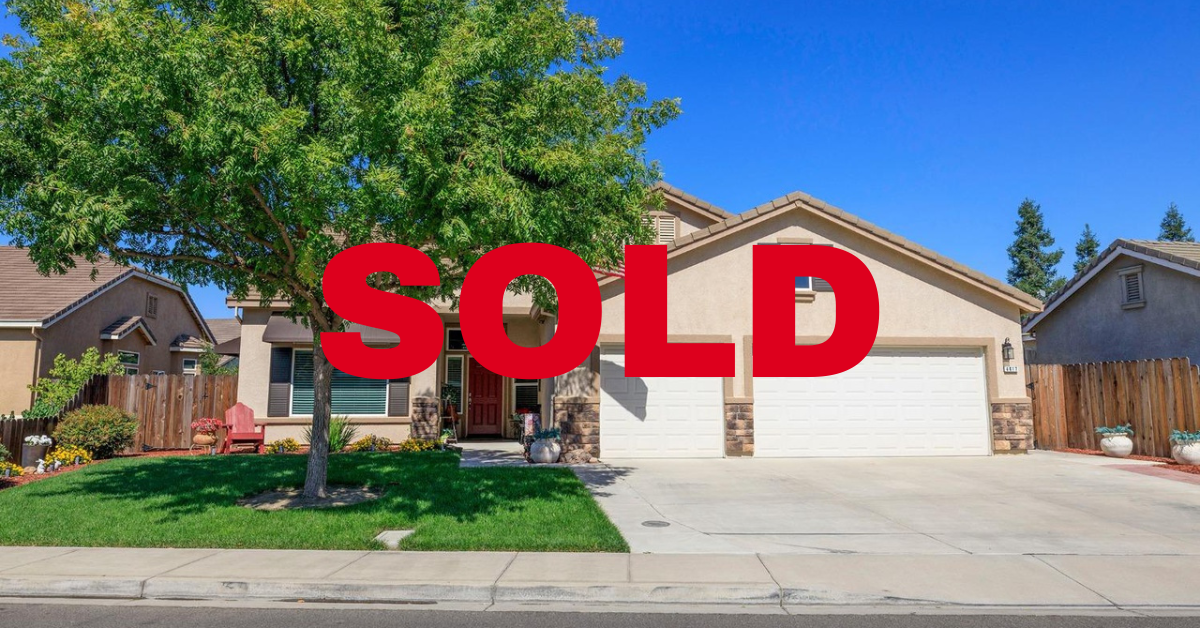
SOLD – 19139 Fairway Ct. Turlock

SOLD co

Fairway Court Near the Turlock Country Club. Single Story, Custom Home, at the End of a Court. Feels like a Residential Home with a Country Atmosphere. Completely Remodeled with New Features from TOP to Bottom. Since 2014 the owners have spent $$$$ from Window to HVAC System, from Stucco to Insulation, including Plumbing, Electrical, and the 100-year Roof. Everything within this Home is done with Charm and Detail. Open Floor Plan with a Great Room Concept. Over 2200sf Home with 0.33 of An Acre Lot. 3 Bedrooms with 3 Full Baths with Media/Enormous Office. Newer Remodeled Kitchen, Bathrooms, Laundry, and More. Hardwood floors throughout, New Carpet, New Paint, New Light, New Interior Doors, New Hardware, SS Appliances, New Cabinetry, Marble detail, Granite Detail, and Sheetrock Imperfect Finishes. Outdoor Living Space with Outside Kitchen Area done in 2020-2021. Furthermore, the Built-in Pool was Plastered and a New Concrete Deck in 2019. Three Car Garage with New Garage Insulated Doors, Openers, and Cabinets. Private side gate for Boat/RV Access. New Front and Back Landscaping Areas with New Concrete Walkways, Driveways, Trees, and Shrubs.

SOLD – 5202 S Faith Home Rd. Turlock

Hard To Find!! Almost 10 Acres in Turlock. Small Ranchette using the existing Home of 990sf with 2 bedrooms and 1 full bath for an ADU unit and then BUILD your dream home along Christofferson Road. TID Dirt, TID Water, and TID Power.. what a great combination. Close to Hilmar Town and Schools.

SOLD – 21670 Riverside Ave. Hilmar

SOLD - 21670 Riverside Ave. Hilmar

Hilmar Beverly Hills!!! This is a Custom Home on Riverside. Brand New Construction Home with Young Independence Almond trees. This Home takes you to another Setting with its Long Driveway and its Private Views. Big Front Porch with 800+sf Back Patio and designed in Wood Detail to Create an Outdoor Living Space. Super Efficient Energy Home with Solar-Owned on the Roof. Over 3000sf with 4 Bedrooms and 3.5 Baths, Movie Theater Room, Office, & 3 Car garage. Gourmet Kitchen with Leathered Granite, Commercial Appliances, Huge Pantry, Designer Coffee Bar, and More. The Master Suite is defined by Style, Windows, and a Center-pieced Copper Tub in the Master Bath accompanied by a Large Walk-in Closet and Shower Stall. Vaulted Family Room with Wood Ceilings, Fireplace, and the Cozy View of Lands. Front Office off the Grand Entrance. There’s a Junior Suite with Full Bathroom (Shower Stall). All Bedrooms have Walk-in Closets. Almonds are 7th leaf on 21×16 Spacing, Double Line Drip that is Powered by either 75hp Ag Well or TID Surface Water. Class 1 Soils. A Must See!!

SOLD – 4617 Mt Bullion St. Denair

4617 Mt Bullion St, Denair SOLD
A stunning SINGLE story home in Denair with 5 bedrooms, 3 full bathrooms, approx. 2500 square feet of living space, pool & spa on a huge .22 acre lot! This home brings class & style right to your front door with an open living room/formal dining area, which includes a pool table that stays with the home! The openness of the family room & kitchen will surely make this the home’s gathering place. The updated kitchen features granite counters, an island, wood tile floors, and newer appliances. The spacious Master bedroom has a sliding glass door that takes you out to the wonderful backyard, that’s set up for entertaining & family fun. In the Master bathroom enjoy heated floors, a large soaking tub & separate shower. Nicely landscaped backyard with sparkling spa & heated pool with waterfall & colored lights plus the large covered patio to relax under or get out of the sun. To finish off the list of great things about this home it has 3 car, a finished garage & nice shed which could be a “She Shed or Man Cave.” Pride of ownership is reflected both inside & out and there’s only been 1 owner! So if you’re looking for a 5-bedroom home with a pool be sure to put this delightful home on your list. 

SOLD – 5201 S Quincy Rd. Denair

SOLD - 5201 S Quincy Rd. Denair
Custom Country w/ 19 Acres of Trees, Metal Shop, & 2 Custom Houses on a Dead-End Country Road. Recently Remodeled and updated is the Main House of 2600+sf w/ 3 Bedroom (Possible 4th is Available) & 2 Full Baths. New Kitchen w/ Newer Appliances, Newer Floors & Quartz Counters. Great Floor Plan with High Vaulted Ceilings, Media Room, Awesome Brick Fireplace, and Views from Every Room throughout this Beauty. Replastered Pool w/ Freshly Painted Pool Deck, Upgraded hardscaping w/ Veneer, Retaining Walls throughout the Yard. The pergola has a Fire Pit and a separate Hot Tub Area. 3 Car Garage. The Second Home is all Country w/ 1400+sf, 3 Bedrooms & 1 Full Bath. Recently, Painted & Brand New Roof. 30×40 Metal Shop w/ Storage Room/Office/Man Cave… Almond Trees were Planted in 1998, Varieties are Nonpareil, Price, & Carmel all on Micro Sprinklers. 2 Sources of Irrigation Water. Private Ag Well & TID Canal Water Connected to Private Booster Pump. Storage Barn for Animals, Possible Tac Room, and More.

Top Tax Advantages of Buying a Home

tax credits

Save money with these deductions and credits.

There are plenty of perks to owning your own home rather than renting. You can knock down walls if you want to, you can install a professional home theater system, or you can paint the walls with purple polka dots if you like. But there are other benefits—the financial kind.

If you rented in the past, all of your money went to a landlord, and none of it came back to you as a tax deduction. That changes if you’re a homeowner.

Whether you buy a mobile home, townhouse, condominium, cooperative apartment, or single-family home, several tax breaks can save you money at tax time.

The downside is that your taxes will get more complicated. You can’t just plug your W-2 information into Form 1040 and finish your taxes in 10 minutes. As a homeowner, you can take advantage of itemizing, which can save you a lot of money.

KEY TAKEAWAYS

    • The Internal Revenue Service (IRS) provides several tax breaks to make homeownership more affordable.
    • Common tax deductions include those for mortgage interest, mortgage points, and private mortgage insurance (PMI).
    • To claim the deductions, you have to itemize your taxes rather than taking the standard deduction.
    • Tax credits are available for qualified first-time homebuyers and homeowners who invest in energy improvements like solar panels and energy-efficient windows.1

The standard deduction for the 2024 tax year is $29,200 for couples filing jointly, and $1,460 for singles. That’s up from $27,700 for couples and $13,850 for singles in 2023.2 You might do a quick calculation of your deductions and see if the standard deduction saves you more.

Tax Credits vs. Tax Deductions

In the tax world, there are deductions, and there are credits. Credits are better.

    • A credit is directly subtracted from your tax bill. If you get a $1,000 tax credit, your total tax amount due will decrease by $1,000.
    • A tax deduction reduces your adjusted gross income (AGI), which reduces the amount of taxes you owe. For example, if you’re in the 24% tax bracket, your tax liability will be reduced by 24% of the total claimed deduction. If you claim a $1,000 deduction, your tax liability will drop by $240 ($1,000 × 24%).

Tax Deductions for Homeowners

Most of the favorable tax treatment that comes from owning a home is in the form of deductions. Here are the most common deductions:

Mortgage Interest Deduction

You can deduct your home mortgage interest on the first $750,000 ($375,000 if married filing separately) of mortgage debt. The old limit—$1 million ($500,000 if married filing separately)—applies if you bought your home before Dec. 16, 2017.3

You can’t deduct home mortgage interest unless you itemize deductions on Schedule A Form 1040 or 1040-SR. You can deduct mortgage interest on a second home as long as the mortgage satisfies the same requirements for deductible interest as on your primary residence.4

In January, after the end of the tax year, your lender will send you Internal Revenue Service (IRS) Form 1098, detailing the amount of interest that you paid in the previous year.5

If you just bought your home, be sure to include any interest that you paid as part of your closing. Lenders will include interest for the partial first month of your mortgage as part of your closing. You can find it on the settlement sheet. Ask your lender or mortgage broker to point this out to you. If it’s not included on your 1098, add this to your total mortgage interest when doing your taxes.

Mortgage Points Deduction

You may have paid mortgage points to your lender as part of a new loan or refinancing. Each point that you buy generally costs 1% of the total loan and lowers your interest rate by 0.25%. For example, if you paid $300,000 for your home, each point would equal $3,000 ($300,000 × 1%).

With a 4% interest rate, for instance, that one point would lower the rate to 3.75% for the life of the loan. As long as you actually gave the lender money for these discount points, you get a deduction.

Like the mortgage interest deduction, discount points are deductible on the first $750,000 of debt.

If you refinanced your loan or took out a home equity line of credit (HELOC), you receive a deduction for points over the life of the loan. Each time you make a mortgage payment, a small percentage of the points is built into the loan. You can deduct that amount for each month that you made payments. So, if $5 of the payment was for points, and you made a year’s worth of payments, your deductible amount would be $60.40

Your lender will send you Form 1098, detailing how much you paid in mortgage interest and mortgage points. Using that information, you can claim the deduction on Schedule A of Form 1040 or 1040-SR.67

Private Mortgage Insurance (PMI)

Lenders charge private mortgage insurance (PMI) to borrowers who put down less than 20% on a conventional loan.8 PMI usually costs $30 to $70 a month for each $100,000 borrowed. Like other types of mortgage insurance, PMI protects the lender (not you) if you stop making mortgage payments.

Depending on your income and when you bought your home, you might be able to deduct your PMI payments.9

Mortgage insurance premiums are no longer deductible.10

State and Local Tax (SALT) Deduction

The state and local tax (SALT) deduction lets you deduct certain taxes paid to state and local governments if you itemize on your federal return.

The $10,000 cap applies whether you are single or married filing jointly and drops to $5,000 if you’re married filing separately.11 The deduction limit relates to the combined total deduction of state income, local income, sales, and property taxes.

You must itemize your deductions to claim the mortgage interest deduction, mortgage points deduction, and SALT deduction. You can’t claim these deductions if you take the standard deduction when filing your tax return.

If you pay your property taxes through a lender escrow account, you’ll find the amount on your 1098 form.5

Otherwise, you can look at your personal records in the form of a check or automatic transfer if you pay directly to your municipality.

Be sure to include payments that you made to the seller for any prepaid real estate taxes (you can find them on your settlement sheet).

State and local income taxes withheld from your paycheck appear on your W-2 form, which your employer(s) should send by the end of January following the tax year.1213 If you elect to deduct state and local sales taxes instead of income taxes (you can’t deduct both), you can use your actual expenses or the optional sales tax tables found in Schedule A (Form 1040).1415

Home Sale Exclusion

Chances are you won’t have to pay taxes on most of the profit that you make when you sell your home, thanks to the home sale exclusion.

If you’ve owned and lived in the home for at least two of the five years before the sale, you won’t pay taxes on the first $250,000 of profit (that is, the capital gain). The number doubles to $500,000 if you’re married filing jointly. However, at least one spouse must meet the ownership requirement, and both spouses must meet the residency requirement that they have lived in the home for two out of the previous five years.16

You might be able to meet part of the residency requirement if you had to sell your home early due to a divorce, a job change, or some other reason.

If you have a taxable gain on the sale of your main home that is greater than the exclusion, report the entire gain on Form 8949: Sales and Other Dispositions of Capital Assets.17

Depending on how long you owned the home, any gains will be taxed at either the short-term or long-term capital gains rate:

    • Short-term capital gains tax rates apply if you owned the home for less than a year. These gains are taxed at your ordinary income tax rate, which will be somewhere between 10% and 37% depending on your income for the year. 18
    • Long-term capital gains tax rates apply if you owned the home for more than a year. The rate is 0%, 15%, or 20%, depending on your filing status and income.19

Tax Credits

You might be eligible for a mortgage credit if you were issued a qualified mortgage credit certificate by a state or local governmental unit or agency under a qualified mortgage credit certificate program.20

Also, check energy.gov to find out whether your state offers tax credits, rebates, and other incentives for energy-efficient improvements to your home.

Which Expenses Can I Itemize?

Homeowners can generally deduct home mortgage interest, home equity loan or home equity line of credit (HELOC) interest, mortgage points, private mortgage insurance (PMI), and state and local tax (SALT) deductions.

Whether or not you’re a homeowner, you may be able to deduct charitable donations, casualty and theft losses, some gambling losses, unreimbursed medical and dental expenses, and long-term care premiums.

You itemize your deductions on Schedule A Form 1040.

Who Should Itemize Deductions?

All taxpayers have the option of taking the standard deduction or itemizing deductions. You can take whichever option saves you the most.

The standard deduction for the 2024 tax year is $29,200 for couples filing jointly and $1,460 for singles. For the 2023 tax year, it’s $27,700 for couples and $13,850 for singles.2

Note that these numbers are double the standard deduction amounts available before 2018 when the tax code got an overhaul. You might do a quick calculation of your deductions and see if the standard deduction saves you more.

What Are the Standard Deduction Amounts for 2023?

For the 2023 tax year, the standard deduction is $13,850 for single people or married couples filing separately, $20,800 for heads of household, and $27,700 for married filing jointly couples.

For the 2024 tax year, the deduction is $14,600 for single people or married couples filing separately, $21,900 for heads of household, and $29,200 for couples who are married filing jointly.18

The Bottom Line

Let’s keep this in perspective: If you’re in the 24% tax bracket, you’re still paying nearly 75% of your mortgage interest without any deductions.

Don’t fall into the trap of thinking that paying interest is beneficial because it reduces your taxes. In many cases, paying off your home as quickly as possible is the best financial move, particularly with the much larger standard deduction now in effect.

Source: investopedia.com ~ By: By TIM PARKER ~ Image: Canva Pro

SOLD – 879 Lee Ave, Newman

SOLD
Hardwood Floors with a Fabulous Single Family Home in Newman.  An Extra Detached 2 Car Garage in the Back!!! Approx. 1058sf with 3 Bedrooms and 1 Full Bath and Attached One Car Garage.  Huge Living Room with Picture-Like Windows. Cute, Clean, and Well Taken Care off. Newer HVAC System, Newer Roof, and More.  Large Backyard and Large Concrete Area with Side Access.  A Must See!!

SOLD – 4419 E Barnhart Rd, Denair

SOLD 4419 E Barnhart Rd, Denair

Superior Home with Superior Elevated Views!! This Custom Ranchette has All the Touches. The park-like setting from the Front Porch to the Back Pool Area. Over 2152sf with 4 Bedrooms, Barn, Shop, 3 Car Garage, and Possible Studio. The Master Bedroom is Downstairs. Multiple Bedroom Areas with Full Bath Upstairs. Picture-like Window views Original Details and Similarities from Hardwood Floors, to the Wood Works, Casings, and Built-ins. Newer Amenities include Dual Pane Windows, 2 HVAC Systems, a Water Softener, a Remodeled Kitchen, Remodeled Bathrooms, Newer Electricity, a Newer Roof, Newer Paint, and a Newer Pool with Cover. Horse Setup with 2-3 Stalls with Lots of Feed Storage, RV Garage, and the additional adjacent Carport. Huge Trees on the Property, Garden Area, Irrigated, and Fenced Corrals. The Property is Completely Fenced with a Private Gate. 

Buying or Selling a Home in Winter: What You Need to Know

Buying or Selling a Home in Winter

Nobody buys or sells a home in the winter, right? Well, if you checked the numbers, you’d find that plenty of homes are sold during the coldest months of the year. From December 2022 to February 2023, nearly 800,000 homes sold in the U.S. That’s a lot of houses!

In other words, the number of homes bought and sold during the winter is nothing to sneeze at. Plus, since most buyers search for homes online these days, it’s not like outdoor temperatures are keeping potential buyers from looking around.

If you’re wondering whether you should put off buying or selling a home until spring, there’s no need to wait. In fact, there are several advantages to buying or selling while Jack Frost is nipping at your nose. Let’s look at some of the biggest ones and go over some tips that’ll get you moving in the right direction.

Tips for Selling in the Winter

Nothing says welcome home quite like the smell of a gingerbread candle and some Christmas lights—it’s easier to stage a house and make it feel like home in the wintertime!

Here are a few tips to help you set the buying mood:

    • Keep it simple. If you’re selling around a holiday and have decorations up, make sure they accent—not overpower—a room. Less is more.
    • Crank up the cozy. Light a fire in the hearth, play soft holiday music in the background, and prepare fresh-baked goods or mulled cider for guests.
    • Shine a light outside. Winter days get dark early. Brighten your home’s exterior with outdoor spotlights.
    • Take down outside decor. Nothing says “my home won’t sell” like a house with reindeer inflatables on the lawn in February.
    • Avoid a winter wonderland. Snow is great—unless we’re talking about outside shots of your home. Buyers want to see details of the house, not a blanket of snow. Make sure you have clear-weather photos of your home.

Remember, the nicer your home looks, the more likely it is to sell—and for more money.

Advantages of Selling Your Home in the Winter

Okay, huddle up, home sellers. Let’s unpack the perks of selling when the air gets chilly.

1. You’ll face less competition.

Come spring, more sellers will flood the market and your home will be just another fish in a great big pond. But in winter, you’ve got a limited number of sellers on the market. For example, the number of active home listings in the U.S. during 2021 and 2022 dipped during the winter and didn’t begin rebounding until the spring of the following year.2

If that pattern repeats in 2023–2024, you’ll have less competition on the market if you list your home during the winter! Buyers have fewer homes to choose from, which means you could sell your house faster.

2. Buyers often mean business.

Most folks want to curl up under a blanket next to a warm fire on a cold winter day. If a buyer is trudging around in freezing weather or breaking away from their holiday schedule to look at your home, they must be serious. That’s because many winter buyers are working against a deadline, whether it’s an expiring lease, relocation, or a contract on their current home. They may also be trying to snag some tax breaks before the end of the year.

3. People have time off during the holidays.

You may think people are less likely to see your home in the midst of their hectic holiday schedules. That can definitely be true. But keep in mind, that many people also have more time off around the holidays. That means more time for browsing their favorite home apps, dreaming about their future decor, and even scheduling home showings.

Tips for Buying in the Winter

Alright, home buyers. Now it’s your turn. Below are some tips for buying a house when the weather outside is frightful.

    • Don’t buy until you’re debt-free with an emergency fund. Hold off on buying a home if you haven’t paid off all your consumer debt (think credit cards, car notes, and student loans) or saved up a full emergency fund worth 3–6 months of your typical expenses. You should prioritize those financial goals first.
    • Save up a strong down payment. You need to make a strong down payment when you buy a home because a bigger down payment means smaller monthly payments and less debt overall. Aim for a 20% down payment since that’ll keep you from having to pay monthly private mortgage insurance fees. (A 5–10% down payment is fine if you’re a first-time home buyer, though.)
    • Stick to your budget. Sure, home prices might drop a bit with the temperatures. But that doesn’t mean you should justify spending any more than 25% of your monthly take-home pay on monthly housing payments. To make sure your winter home purchase is a blessing and not a curse, calculate how much house you can afford and stick to it.
    • Negotiate with confidence. Remember, there isn’t much competition. So, sellers will probably be willing to work with you. If the home inspection brings up some issues, don’t be afraid to ask your seller to make repairs or lower the asking price.

Advantages of Buying Your Home in the Winter

Now, here are some of the biggest advantages to buying a home in winter:

1. You’ll have less competition.

Home sellers aren’t the only ones who face less competition during the winter! As we saw earlier, home sales take a bit of a plunge during the winter. So, typically, you won’t have to deal with as many competing buyers as you would if you waited to buy in spring. This probably means you don’t have to worry as much about someone else snagging your dream home before you can submit an offer, or about getting caught in a bidding war.

It’s kind of like when someone brings in holiday treats to share with the office but most of your coworkers are out of town. You get first dibs on the best desserts!

2. You may get a better deal.

Since supply and demand for housing are both down during the winter months, you might be able to save money on your purchase! Hard to believe? Get this: The median sales price of homes sold from December 2022 to February 2023 was about $20,000 lower than homes sold from March to May 2023.

That means people who bought their homes during winter saved tens of thousands of dollars compared to those who waited to buy in the spring or summer! That might make any challenges of buying during the wintertime worthwhile.

3. You can lock in the current mortgage rate.

As you’ve probably heard, interest rates have climbed up a lot lately. Well, there’s a chance that the trend will continue moving forward since the Federal Reserve (the Fed) could raise the national interest rate again at its next meeting. So, if you’re going to use a mortgage to buy a house, locking in your rate now could save you from paying even more down the road. And if rates wind up going down over the next year or so, you can always refinance.

If you follow these tips, there’s hope you’ll find the house you want and get a good price on it this winter.

Ready to Buy or Sell Your Home in Winter?

With all these advantages on your side, hopefully buying or selling your home in the winter won’t feel so daunting. We know you’ve probably got a lot on your plate this time of year though. So, we’ve put together some resources to help you check everything off your list. For a step-by-step plan that’ll walk you through every part of the process, use our free Home Buyers Guide or Home Sellers Guide.

Source: ramseysolutions.com ~ Image: Canva Pro