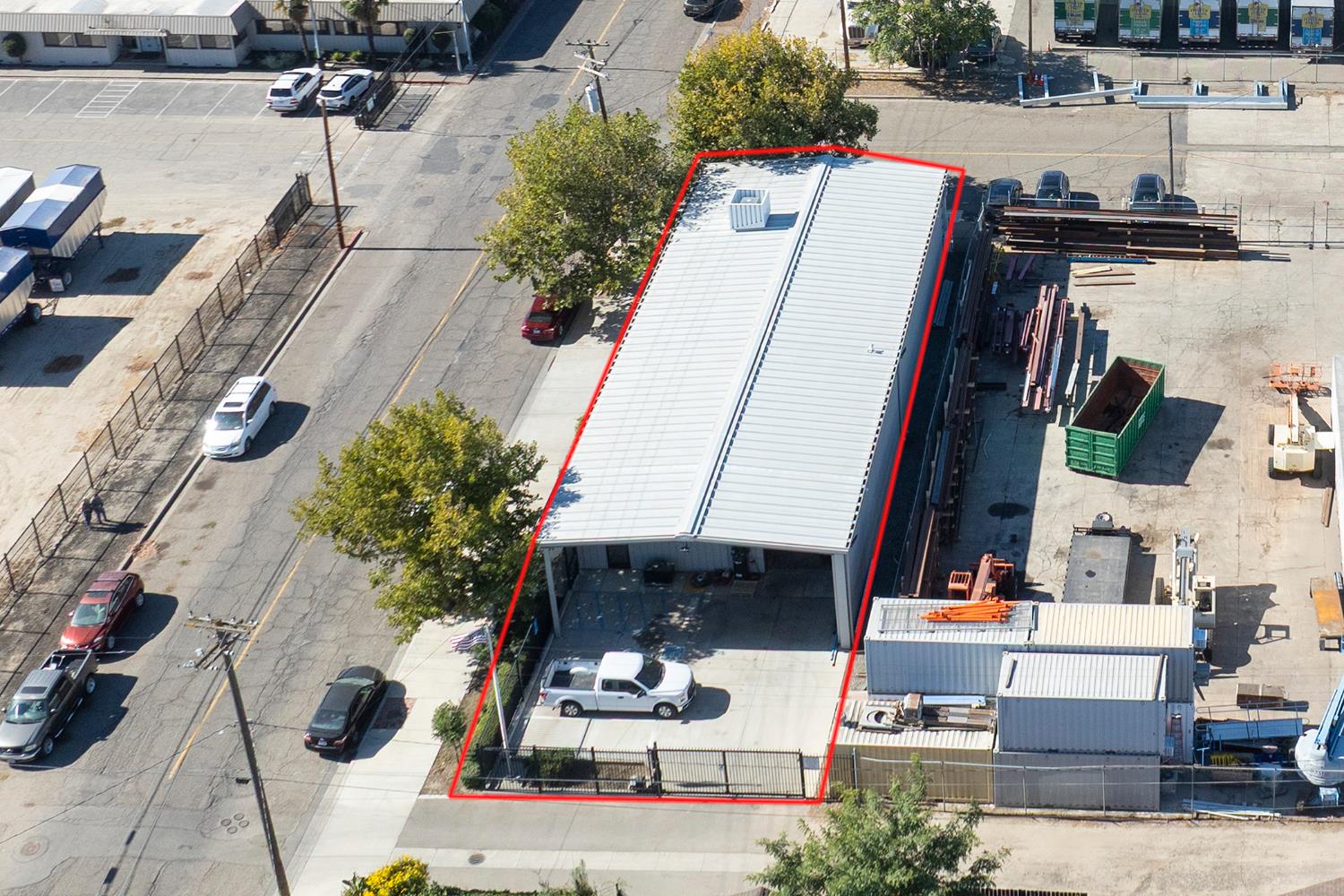
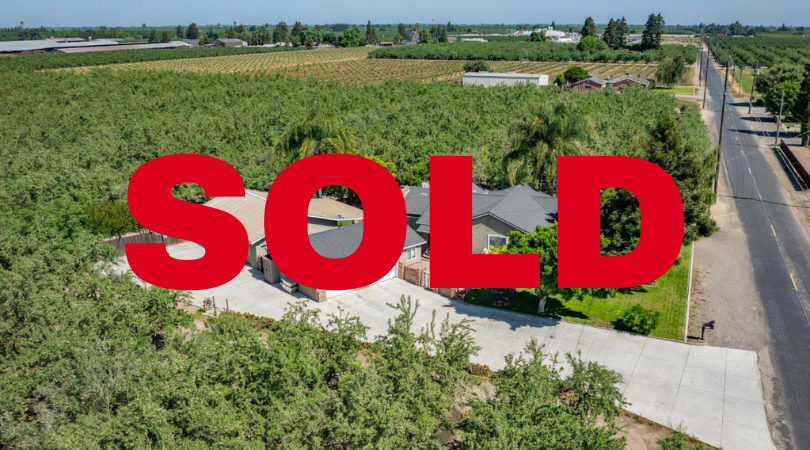
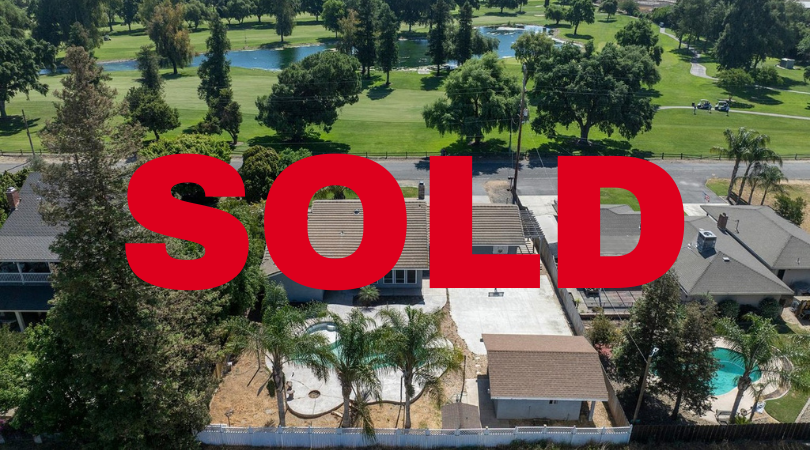
SOLD – Welcome to 980 Tahoe Drive. A warm and inviting home with a unique layout and thoughtful updates. The recently remodeled kitchen features newer countertops, cabinets, and drawers, and opens seamlessly into the living area, creating a spacious flow perfect for daily living or entertaining. A double-sided fireplace beautifully splits the living room into two cozy hangout zonesideal for relaxing, reading, or gathering with family and friends. Large slab tile flooring runs throughout the home, offering both style and durability. The low-maintenance yard is perfect for a busy lifestyle or those who prefer to spend their weekends enjoying rather than maintaining. Situated on a corner lot in an established, desired neighborhood near parks and schools, this home offers comfort, character, and flexibility to make it your own.
SOLD – 3824 S Commons Rd Turlock
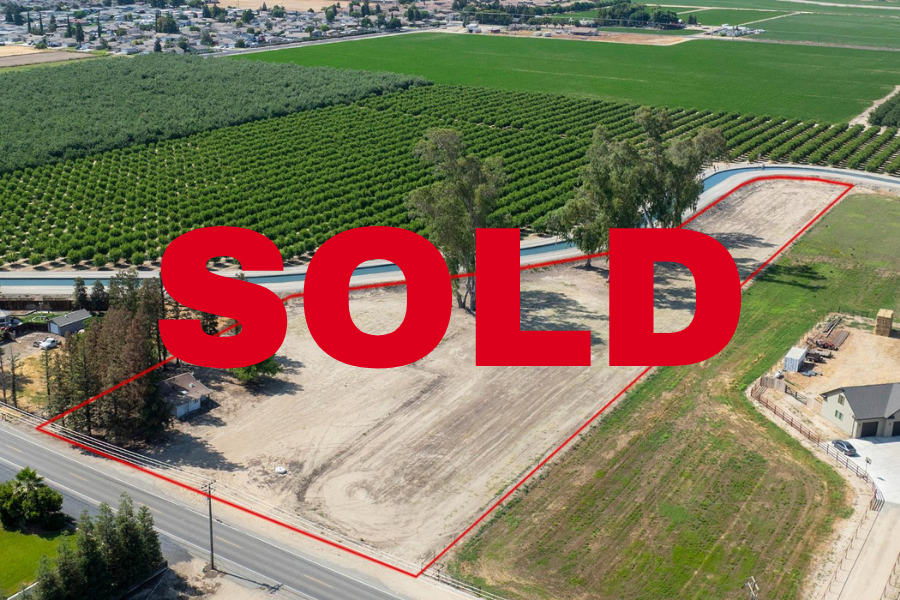
SOLD – Affordable Country Living At Its Best! Approximately 9.8 acres of prime farmland utilizing TID irrigation. Darling 2-bedroom, 1-bathroom home has recently been painted inside and out. Floor plan highlights the living room with wood floors and a brick fireplace as a focal point. The Kitchen features tile counters/bar area and plenty of cabinetry for storage, and a stainless steel refrigerator. A large bathroom with a tub/shower enclosure is a plus. Extra built-in cabinetry in the hallway makes a perfect linen closet. Spacious bedrooms have ceiling fans. Upgrades include all dual pane windows, a newer water heater (2 years), and HVAC approx. 7 years old. The attached 2-car garage has a pedestrian door leading to the kitchen. Enjoy the panoramic mountain views in the front or hanging out on the back patio.
SOLD- 4270-4374 Sultana Ave, Atwater
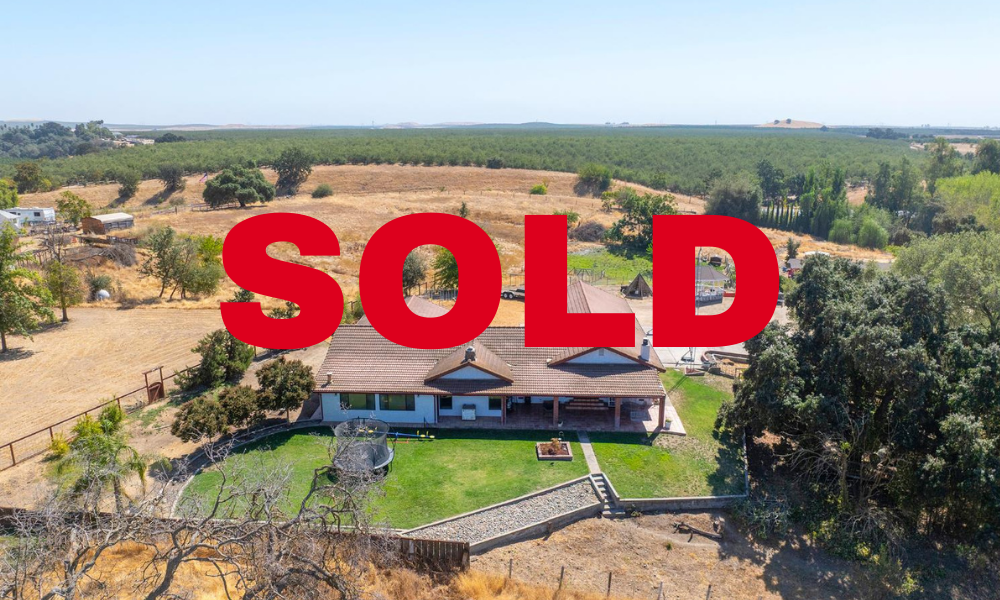
SOLD – Two Homes on Over 10 Acres w/ Farm Setting & Almond Orchard. Discover country living at its finest w/ this unique property featuring 2 separate parcels totaling over 10 acres & 2 distinct homes. The Main Ranch home offers 1, 510sf of inviting living space, including 3 spacious bedrooms & 2 full baths. Enjoy an open, desirable floor plan w/ large living areas connecting the family room, kitchen, & dining spaces. Picture yourself relaxing by the grand fireplace or taking in the serene farm views from the family room. The kitchen is a chef’s delight w/ abundant cabinetry, built-ins, a dining bar, & a formal dining area. The master suite features a walk-in closet, while the home also includes an indoor laundry room, an oversized 2-car garage, a detached RV storage garage, & a separate 2-car carport w/ storage. The property boasts mature almond trees (Nonpareil and Carmel, planted in 2000) on solid set sprinklers, providing both beauty & potential income. The second home is a well-maintained 1, 200sf mobile home w/ 3 bedrooms, 2 full baths, a separate property entrance, & its own address-perfect for extended family or rental income. Comprising a 1-acre & a 9.22-acre parcel, this is a must-see property that blends comfort, versatility, & rural charm.
Avoid Foreclosure, ‘Equity Exit’ Strategy
Mortgage delinquencies are on the rise in nearly half of U.S. states due to rising costs of homeownership, and many people—especially those who bought when interest rates were high or have recently faced job loss or rising expenses—are finding themselves in a tough financial spot.
While foreclosure can seem like the end of the road, there’s another option that’s often overlooked: the “equity exit.” Originally a strategy used by real estate investors, it’s now being used by everyday homeowners to sell their home and take back control before things spiral.
An equity exit won’t erase the hardship—but it can help you avoid serious credit damage, preserve some financial footing, and give you a chance to move forward on your terms before the worst happens.
What is the ‘equity exit’ strategy—and why has it mostly been used by investors?
The equity exit strategy involves selling a home before the bank forecloses, allowing you to access any remaining equity, pay off your mortgage, and avoid the credit-damaging consequences of foreclosure.
Unlike a short sale, where the lender agrees to accept less than what you owe on your mortgage balance, the equity exit strategy focuses on selling while there’s still time and value left in the house.
Historically, this strategy has been more commonly employed by investors in distressed markets rather than traditional homeowners since investors are often more attuned to market conditions and can act quickly to mitigate their financial losses. They recognize that, in a declining market, time is of the essence.
By selling before foreclosure, they can recoup some of their investment and prevent a total loss, which is especially critical when the property’s value is dropping and other costs (like taxes and maintenance) might outweigh any potential profits.
As awareness grows about the potential benefits of selling before foreclosure, more homeowners are beginning to consider the equity exit as a viable option. It can empower them to take control of their financial situations, much like investors have done for years.
How an equity exit can help homeowners reclaim control
If you owe more on your mortgage than your home is worth, it might be a smart option and often the least damaging path forward. But while these benefits can be valuable, remember that this is still a loss in some respects as you’re parting with your home.
Avoid the long-term credit damage
One of the biggest advantages of selling before foreclosure is protecting your credit. A foreclosure can stay on your credit report for up to seven years, making it harder to qualify for future loans, credit cards, or even rental housing.
Walk away with some equity or cash
By acting quickly, you might still be able to recoup some of your home’s equity or at least walk away with a bit of cash, which could provide a financial cushion as you transition to a new living situation. The proceeds from the sale might even cover relocation costs or a rental deposit for a new place.
Stay in control of the timeline
Selling your home allows you to be in charge of the timeline. Instead of being forced into a rushed move during foreclosure, you can plan and make thoughtful decisions about your next steps.
Homeowners typically have several months before foreclosure proceedings take hold, but the exact timeline can vary by state and lender. That’s why it’s so important to reach out early to a real estate agent, investor, or financial adviser as soon as you realize you might have to sell.
The hard truth: You’ll still lose your home—but you can rebuild
An equity exit is not a silver bullet. Selling under financial pressure can sometimes mean accepting less-than-ideal offers, and ultimately, you won’t get to keep your home. Afterward, you might have to downsize or rent for a while as you get back on your feet as well.
But even in a difficult moment, this choice can open the door to something better than foreclosure. Perhaps the biggest benefit of an equity exit is that it gives you—and not the bank—the power to decide what comes next.
After a sale, your focus can shift to rebuilding. That might mean repairing credit with consistent on-time payments, working with a HUD-approved housing counselor, or applying for rental assistance programs designed to help those who are transitioning out of homeownership. Local housing authorities and financial coaching services can provide guidance, rental support, and help for creating a realistic path forward.
It’s not the only option
Equity exit is one strategy—but it’s not the right fit for everyone. There are many other foreclosure alternatives, like a loan modification or short sale. A loan modification can adjust your interest rate or extend your loan term to make payments more manageable. A short sale, while still a sale at a loss, might be a better financial move depending on your lender’s terms.
Talking to a trusted adviser can help you weigh all your options and choose the one that’s right for your situation.
Source: realtor.com ~ By: Elissa Suh ~ Image: Canva Pro
Old vs New Homes: How old of a house should I buy?
If you’re in the market to buy a home, you’ll likely wind up looking at lots of listings and touring many different types of properties. You may see some that are brand-new construction, and some that are a century old. Both have their appeal. If you’re not sure which one is best for you, here are some of the differences between old houses and new houses.
Old vs. new homes
While many aspects of housing have held true across the decades, there are plenty of different trends that affect homebuilding over time. Depending on the age of a home, you will notice different features, building methods and design choices.
Historic homes
Older homes are likely to have very different design sensibilities than modern ones. This is in part due to technological innovations, but also differing tastes over the years.
For example, truly historic homes often lack ductwork or central air systems, because those technologies did not yet exist when they were built. They may also boast old-school features like cast-iron radiators, clawfoot tubs and Victorian-style woodwork. And they tend to have smaller, more individual rooms, as opposed to the spacious open floor plans of modern homes.
These homes will also have different architectural styles than a newer build. For instance, midcentury homes often utilized unusual shapes and colors. And many neighborhoods built in that era have a cookie-cutter style, with the homes within each development all looking very similar to each other.
New-construction homes
If you’re looking at newly constructed homes, you’re likely to notice some current trends in how they are designed and built. Modern homes may sport features like metallic roofs and curvy building elements, for example. You may also see greater use of outdoor space — something that became much more important to homeowners during the pandemic.
Other trends may also be apparent, such as smart technology, energy-efficient features, central air systems, and living rooms oriented around space for a TV or entertainment center, rather than a fireplace.
Older home pros and cons
Pros
- Location: Older homes are typically located closer to the center of towns, and in more walkable areas near more amenities. If you want a really central location, you may need to buy an older home.
- Charm: Unique architectural details and flourishes give an older home personality that might be lacking in a newer, boxier build.
- Value: A home with a strong sense of history, or one with a desirable architectural style in a historic neighborhood, may be worth more than a newer home of similar size.
- Speed: If you’re buying a new-build home, you might face construction delays or supply-chain issues that slow down the process. With an old home, that isn’t a concern.
Cons
- Outdated infrastructure: Technology has changed a lot over time, obviously. Old homes may still use older heating and cooling systems or have fewer electrical outlets than you’d like. Similarly, these homes might not be up to modern code, and renovating to bring things up to today’s standards can be costly.
- Expensive upkeep: Brooks Conkle, a Mobile, Alabama–based Realtor, points out that ongoing maintenance costs can be higher in an older home. “The repair costs for older homes can quickly escalate,” he says. “Be sure to get a home inspection and really understand the home well. A newer home is [most likely] going to be in better condition and more energy efficient.”
- Small or non-standard sizing: Older homes are often not designed for the size of modern appliances or furniture. You might find that your living room is too small for your sofa, for example, or that your kitchen requires an unusually sized refrigerator.
Newer home pros and cons
Pros
- Energy efficiency: Newer homes are often designed with energy-efficient systems and are usually much cheaper to heat and cool.
- Amenities: Newer homes can also take advantage of modern technology. That means they tend to already have conveniences like central air and dishwashers, for instance, whereas older homes might have to be retrofitted for this equipment.
- Customization: If you’re buying a new-construction home, many builders offer the opportunity to customize it to your specific desires.
- Home warranties: New builds also often come with home warranties. These can help protect you from major expenses that might pop up, such as unexpected HVAC or appliance issues.
- Builder incentives: Homes being sold by the builder directly may come with additional incentives to buy, such as rate buy-downs.
Cons
- High prices: With all their modern bells and whistles, newer homes are often more expensive than older ones. That can be particularly true of brand-new construction, where the buyer will be the first person ever to live there.
- Homeowners associations: Many new developments are managed by a homeowners association, or HOA. That’s not necessarily a bad thing, but it does mean paying extra fees and dealing with restrictions on how you can use your home.
- Competition: For a brand-new, move-in-ready home in a desirable location, you’ll probably face stiff competition — and in particularly busy markets, potentially even a bidding war.
Source: bankrate.com ~ By: T. J. Porter ~ Image: Canva Pro
Reasons to Invest in Real Estate vs. Stocks
Whether it’s planning for retirement, saving for a college fund, or earning residual income, individuals need an investment strategy that fits their budget and needs. Comparing an investment in real estate to buying stocks is a good place to start.
Key Takeaways
-
- The decision to invest in real estate or stocks is a personal choice that depends on your financial situation, risk tolerance, goals, and investment style.
- Real estate and stocks have different risks and opportunities.
- Real estate is not as liquid as stocks and tends to require more money and time. But it does provide a passive income stream and the potential for substantial appreciation.
- Stocks are subject to market, economic, and inflationary risks, but don’t require a big cash injection, and they generally can be easily bought and sold.
Overview: Real Estate vs. Stocks
Investing in real estate or stocks is a personal choice that depends on your financial situation, risk tolerance, goals, and investment style. It’s safe to assume that more people invest in the stock market, perhaps because it doesn’t take as much time or money to buy stocks. If you’re buying real estate, you’re going to have to save and put down a substantial amount of money.
When you buy stocks, you buy a tiny piece of that company. In general, you can make money two ways with stocks: value appreciation as the company’s stock increases and dividends.
When you buy real estate, you acquire physical land or property. Most real estate investors make money by collecting rents (which can provide a steady income stream) and through appreciation, as the property’s value goes up. Also, since real estate can be leveraged, it’s possible to expand your holdings even if you can’t afford to pay cash outright.
For many prospective investors, real estate is appealing because it is a tangible asset that can be controlled, with the added benefit of diversification. Real estate investors who buy property own something concrete for which they can be accountable. Note that real estate investment trusts (REITs) are a way to invest in real estate and are bought and sold like stocks.
Returns: Real Estate vs. Stocks
Investing in the stock market makes the most sense when paired with benefits that boost your returns, such as company matching in a 401(k). But those perks are not always available and there is a limit to how much you can benefit from them. Investing in the stock market independently can be unpredictable and the return on investment (ROI) is often lower than expected.
Comparing the returns of real estate and the stock market is an apples-to-oranges comparison—the factors that affect prices, values, and returns are very distinct. However, we can get a general idea by comparing the total returns of the SPDR S&P 500 ETF (SPY) and the Vanguard Real Estate ETF Total Return (VNQ) for the last 17 years:
:max_bytes(150000):strip_icc():format(webp)/dotdash_Final_Reasons_to_Invest_in_Real_Estate_vs_Stocks_Sep_2020-01-7d506c14f2584a34a15f17d4e2e2ec2c.jpg)
As the chart demonstrates, both real estate and stocks can take a big hit during economic recessions. Note the big dips that occurred during the 2008 Great Recession and the 2020 COVID-19 crisis.
Risks: Real Estate vs. Stocks
The housing bubble and banking crisis of 2008 brought a decline in value for investors in the real estate and the stock markets—and the COVID-19 crisis is doing it all over again, albeit for different reasons. Still, it’s important to remember that stocks and real estate have very different risks overall.
Real Estate
Here are some things to consider when it comes to real estate and the risks associated with it. The most important risk that people miss is that real estate requires a lot of research. It’s not something you can go into casually and expect immediate results and returns. Real estate is not an asset that’s easily liquidated, and it can’t be cashed in quickly. This means you can’t cash it in when you’re in a bind.
For home flippers or those who own rental properties, there are risks that come with handling repairs or managing rentals. Some of the main issues you’ll come across are the costs, not to mention the time and headache of having to deal with tenants. And you may not be able to put them off if there’s an emergency.
As an investor, you may want and need to consider hiring a contractor to handle repairs and renovations of your flip, or a property manager to oversee the upkeep of your rental. This may cut into your bottom line, but it does reduce your time spent overseeing your investment.
Stocks
The stock market is subject to several different kinds of risk: market, economic, and inflationary risks. First, stock values can be extremely volatile with their prices subject to fluctuations in the market. Volatility can be caused by geopolitical and company-specific events. Say, for instance, a company has operations in another country, this foreign division is subject to the laws and rules of that nation.
But if that country’s economy has problems, or any political troubles arise, that company’s stock may suffer. Stocks are also subject to the economic cycle as well as monetary policy, regulations, tax revisions, or even changes in the interest rates set by a country’s central bank.
Other risks may stem from the investor themselves. Investors who choose not to diversify their holdings are also exposing themselves to greater risk.
Consider this: dividend-paying stocks can generate reliable income, but it would take a considerable investment in a high-yielding dividend stock to generate enough income to sustain retirement without selling additional securities. Relying solely on high-yield dividends means an investor may miss out on opportunities for higher growth investments.
Pros and Cons: Real Estate
Real estate investors have the ability to gain leverage on their capital and take advantage of substantial tax benefits.1 Although real estate is not nearly as liquid as the stock market, the long-term cash flow provides passive income and the promise of appreciation.
Despite this, it’s important to consider the amount of money that goes into real estate investments. You need to have the ability to secure a down payment and financing if you aren’t making all-cash deals.
Since real estate isn’t as liquid, you can’t rely on selling your properties immediately when you may be in need. Other disadvantages include the costs associated with property management and the investment of time that goes into repairs and maintenance.
-
- Passive income
- Tax advantages
- Hedge against inflation
- Ability to leverage
-
- More work than buying stocks
- Expensive and illiquid
- High transaction costs
- Appreciation isn’t guaranteed
Pros and Cons: Stocks
For most investors, it does not take a huge cash infusion to get started in the stock market, making it an appealing option. Unlike real estate, stocks are liquid and are generally easily bought and sold, so you can rely on them in case of emergencies. With so many stocks and ETFs to choose from, it can be easy to build a well-diversified portfolio.
But as noted above, stocks tend to be more volatile, leading to a more risky investment, especially if you panic sell. Selling your stocks may result in a capital gains tax, making your tax burden much heavier.2 And unless you have a lot of money in the market, your holdings may not be able to grow much.
-
- Highly liquid
- Easy to diversify
- Low transaction fees
- Easy to add to tax-advantaged retirement accounts
-
- More volatile than real estate
- Selling stocks can trigger big taxes
- Some stocks move sideways for years
- Potential for emotion-driven investing
Additional Factors to Consider
Buying a property requires more initial capital than investing in stocks, mutual funds, or even REITs. However, when purchasing property, investors have more leverage over their money, enabling them to buy a more valuable investment vehicle.
Putting $25,000 into securities buys $25,000 in value—assuming you’re not using margin. Conversely, the same investment in real estate could buy $125,000 or so in property with a mortgage and tax-deductible interest.1
Cash garnered from rent is expected to cover the mortgage, insurance, property taxes, and repairs. But a well-managed property also generates income for the owners. Additional real estate investment benefits include depreciation and other tax write-offs.3
Warning
Mortgage lending discrimination is illegal. If you think you’ve been discriminated against based on race, religion, sex, marital status, use of public assistance, national origin, disability, or age, there are steps you can take. One such step is to file a report to the Consumer Financial Protection Bureau or with the U.S. Department of Housing and Urban Development (HUD).
Real estate that generates monthly rental income can increase with inflation even in a rent-controlled area, which offers an additional advantage. Another consideration is taxes after selling the investment. Selling stocks typically results in capital gains taxes. Real estate capital gains can be deferred if another property is purchased after the sale, called a 1031 exchange in the tax code.4
What is the 1% Rule in Real Estate?
The 1% rule is a guideline that states a real estate property’s monthly rent should be at least 1% of its purchase price. For example, if you bought a rental property for $100,000, the monthly rent should be at least $1,000 under the 1% rule. This rule is a derivative of the 2%, which is considered less achievable in a climate of high real estate values.
What Has a Higher Return, Stocks or Real Estate?
Between 1992 and 2024, stocks performed better on average than real estate. During this period, the S&P 500 returned 8.27% annually (10.24% when including dividends), while the U.S. housing market grew 5.5% annually5.6
How Do REITs Compare to Stocks?
Historically, REITs have performed better than stocks, although this is not true in every year. Between 1972 and 2023, the S&P 500 returned 10.2% annually, compared to 12.7% for all equity REITs.7 That said, the S&P 500 has performed better than most REITs in the last few years.
The Bottom Line
Real estate and stocks both present risks and rewards. Investing in the stock market gets a lot of attention as a retirement investment vehicle, particularly for people who contribute regularly to a tax-advantaged account, such as a 401(k) or individual retirement account (IRA). However, diversification is important, especially when saving for the long term.
Investors should opt for a variety of asset classes or sectors to reduce their risk. Investing in real estate is an ideal way to diversify your investment portfolio, reduce risks, and maximize returns. Keep in mind that many investors put money into both the stock market and real estate. And if you like the idea of investing in real estate but don’t want to own and manage properties, a REIT might be worth a second look.
The Fundrise Income Fund is designed to deliver consistent cash flow, even if interest rates start to fall. The Fund offers access to a diversified portfolio of income-focused assets worth more than half-a-billion dollars. Start growing your cash flow at Fundrise.com/Income. Before investing, consider the Fund’s objectives, risks, charges, and expenses. Prospectus available at Fundrise.com/Income.
Top 10 Mortgage and Home-Buying Myths & Truths
Buying a home is usually the biggest purchase people make, and the path to arriving at the right decision is often daunting. This is because even a slight oversight may lead to negative consequences in the future. To make matters even more complicated, prospective homebuyers have to find their way around various home buying myths.
While family and friends offer well-meaning advice, with some even suggesting that buying a house is a waste of money, bear in mind that not all you hear about buying a home might be true. Real estate agents and mortgage providers do what they can when it comes to debunking home buying myths, and most experts from this realm mention having to deal with similar misconceptions.
1. Renting is Cheaper Than Buying
Whether it’s cheaper to buy a home than continue living on rent depends on where you live. According to a report released by Realtor.com, buying a home in January 2020 was as affordable as renting, if not more, in 15 of the country’s 50 largest metros. Bear in mind that this only highlights the monthly costs involved in buying a home and living on rent. While the rent you pay is never coming back, your mortgage payments help you build equity in your home.
2. You Start the Process by Looking for a Home
One of the top myths about buying a home is that you need to start the process by looking for a suitable property. However, this might not be in your best interest because you may set your mind on a house, only to find out you do not qualify for the required mortgage amount. In this case, you’ll need to begin the house-hunting process again, already having wasted valuable time.
Ideally, you should begin the home buying process by ensuring that your finances and your credit score are in order. Then, you seek preapproval for a mortgage. Once you know how much you qualify for, look for homes accordingly.
3. Preapproval Comes with a Guarantee
Unfortunately, getting preapproved for a mortgage does not guarantee that a lender will approve your loan. For example, if your employment status changes after you receive preapproval, a lender might reconsider your application. This is also the case if there’s a change in your income or overall financial situation. While lenders review your creditworthiness before granting preapproval, they do so during the final underwriting as well.
4. A 20% Down Payment is Necessary
When it comes to the most commonly spread home buying myths, this one probably takes the cake. Sure, making a 20% down payment is a good idea. However, you may qualify for different types of mortgages by paying less than 20% upfront. When it comes to how much down payment you need, it boils down to your specific situation and the type of mortgage you’re after.
-
- Conventional mortgage. You need to pay 5% to 15% as down payment, and you also need to account for private mortgage insurance (PMI).
- S. Department of Veterans Affairs (VA) loan. Eligible applicants don’t need to make any down payment.
- S. Department of Agriculture (USDA) loan. If you qualify, you may choose to make no down payment at all.
- Federal Housing Administration (FHA) loan. These loans come with a minimum down payment requirement of 3.5%.
- Jumbo loans. Down payment for these loans can be as low as 10%.
In addition, first-time homebuyers should ideally check if they qualify for any down payment assistance programs run by state and local government agencies.
5. People With Poor Credit Cannot Buy Homes
There is no minimum credit score that will disqualify you from buying a home, although the lower it is, the more difficult it becomes to find a mortgage. If you’re looking for a conventional loan, your credit score should ideally be over 620. However, people with slightly lower scores who have high incomes or are willing to make large down payments might also qualify.
When it comes to FHA loans, people with credit scores of over 580 may qualify if they meet a few other eligibility criteria. This is also usually the case with VA loans. If you wish to get a USDA loan, know that most lenders require scores of 640 or higher.
6. People With Student Loans Cannot Get Mortgages
Whether or not people who have student loans may qualify for mortgages depends on their specific situations. For example, if you’ve been making all your payments on time, have a low debt-to-income ratio, and have a good credit score, you might find it easy to qualify for a mortgage. However, the reverse holds true as well.
If you have a student loan, make sure you look at your DTI before applying for a mortgage. You should ideally try to get it to less than 36%, although some lenders consider applicants with DTIs as high as 43%. The lower it gets, the better.
7. The Down Payment is the Only Upfront Cost
Your down payment accounts for a major chunk of the money you need to pay upfront, but you need to account for other costs as well. As a buyer, you are also responsible to cover your loan’s closing costs. Closing costs may vary from 3% to 6% of a home’s selling price, and the state in which you purchase a home also has a bearing on how much you need to pay.
8. Your Mortgage is Your Only Expense as a Homeowner
One of the key facts about buying a house is that you need to account for more than just your monthly mortgage payment. For example, you need to pay property taxes that vary based on where you reside. If you get a conventional mortgage and your down payment is less than 20%, you need to pay extra for private mortgage insurance (PMI). Buying a house also requires paying homeowners insurance, which, according to Policygenius, averages at $1,899 per year.
As a homeowner, you’re responsible for your home’s ongoing maintenance. In this case, you may expect to spend around 1% to 2% of the home’s buying price each year. Depending on where you buy a home, you might also need to pay homeowners’ association (HOA) or condominium association fees.
9. A 30-Year Fixed-Rate Mortgage is the Best
While 30-year fixed-rate mortgages find several takers, they don’t work equally well for everyone, which is why this is among the top mortgage myths. Bear in mind that you get several alternatives from which to choose. These include adjustable-rate mortgages, balloon mortgages, interest-only mortgages, as well as 10-. 15- and 20-year fixed-rate mortgages.
People who opt for 30-year fixed-rate mortgages do so because of two basic reasons. First, the interest rate remains the same over the course of the loan term, so there’s no variation in monthly payments. In addition, the monthly payments of a 30-year mortgage are noticeably lower than that of a 10- or 20-year mortgage. However, the interest you end up paying for a 30-year mortgage will be significantly higher than that of a 15-year mortgage.
The mortgage that works best for you depends on your financial situation as well as the duration you plan to stay in the house you purchase. Consequently, it’s ideal that you learn about the effect of interest rates and loan terms on mortgages before making a decision.
10. Select the Lender With the Lowest Interest Rate
Interest rates play a key role in deciding which mortgage provider to select, but there are other factors to consider as well. For instance, a lender might offer a low interest rate and make up for the same by charging steep fees. When you’re comparing lenders, you should stick to looking at the annual percentage rate (APR) because it gives you an indication of how much you’ll end up paying as interest and fees combined.
Given that paying off a mortgage is typically a long-drawn affair, it’s important to look at the level of customer service a lender provides. Selecting the right mortgage provider also requires looking at flexibility in terms, which may come in the form of weekly/biweekly/monthly payments, payment pauses, and redraw facilities.
11. Interest Rate Are Increasing
This makes it to the list of myths about home ownership because although interest rates increased significantly in 2022, one needs to look at the bigger picture. For instance, 30-year fixed-rate mortgages came with interest rates of around or over 7% during the 1990s, and stood largely above 6% before the Great Recession (2007 to 2009).
In addition, while the average interest rate for a 30-year fixed-rate mortgage peaked at 7.08% in October and November 2022, it dropped to 6.09% in the week ending on February 1, 2023. Most experts predict that this number may vary from 5.5% to 6% for the rest of the year.
12. Buying a Fixer-Upper Saves Money
If you think you might be able to save money by buying a home that is a bad shape and fixing it on your own, you might want to give your decision some serious thought. For starters, you should have some knowledge about construction and making renovations, as well as the required skills and tools.
What attracts homebuyers to fixer-uppers is that they get the opportunity to spend less upfront. However, you need to account for the money you’ll need to spend on repairs and renovations, because the total cost may exceed the cost of a comparable home that’s ready to move in soon after the purchase.
13. There’s No Need for Professional Home Inspections
This is one of those home buying myths that might end up costing you a tidy sum in the long run. Even if you think another prospective buyer might beat you to the finishing line by choosing to skip the home inspection stage, it’s best to err on the side of caution. Remember that checking a home on your home is not the same as getting a professional to carry out the process.
While a professional home inspection comes at a cost, it may help you save money in the long run or even steer clear of making a bad decision. The American Society of Home Inspectors (ASHI) Standard of Practice indicates that a home inspection involves checking a home’s:
-
- Interior
- Exterior
- Structural system
- Roof system
- Plumbing system
- Electrical system
14. You Should Buy a Home During the Spring Season
Sure, the real estate industry is typically buzzing with activity during the spring season, but this does not mean you need to restrict yourself to buying a home during this period. Besides, the truth about buying a house is that you don’t really have to wait for the perfect time to move forward.
Looking to Purchase a Home on Long IslandContact Us
While the spring season usually sees more real estate transactions than other periods, high competition may leave little room for negotiation. The fall, on the other hand, usually brings with it a fair amount of inventory along with reduced competition. This means you may land a good deal even if you choose to buy a home in the fall.
15. Schools Don’t Play a Role if You Don’t Have Children
Prospective homebuyers who don’t have children might have heard that there’s no need to pay attention to schools. However, there’s more to schools in a neighborhood than just educating children. This is because the presence of good schools is typically an indication of good neighborhoods. Besides, homes in reputable school districts tend to have higher values, and they usually manage to find takers even the real estate market is down.
Conclusion
Debunking home buying myths is crucial because there is no dearth of prospective homebuyers who approach the process with various misconceptions. For example, while some might lead you to believe you’re better off as a renter, you might actually benefit by buying a home instead.
More often than not, working with a realtor or a real estate agency is ideal. This is because you then have a professional doing all the groundwork for you as well as someone you may turn to for advice. Once you decide you wish to buy a home, it’s also important to find a suitable lender and get preapproval. This way, you know just how much money you may get in the form of a loan.
SOLD – 5201 N Tully Rd Turlock
SOLD – 38 Acres of Almonds and Peaches in North Turlock. There’s 9 Acres of Butte/Padre Almond trees that are 15 years old. 19 acres of 3rd leaf Carnival Peaches (freestones) and 9.5 Acres of Zee Ladies (freestones) that are 8 years old. The Current Tenant has Contracted Crop with Dole on the Peaches. Currently Using TID Pipeline with FLOOD Irrigation and Micro-Sprinklers from a neighboring Well. There is a 1608sf home with 3 Bedrooms and 1 full Bathroom that is currently rented. Great Looking Orchard with Great Soils. This property is not in the Williamson Act.
SOLD – 736 Vermont Ave, Los Banos
SOLD – The perfect starter home! This 3-bedroom, 1.5-bathroom residence showcases years of loving care at approximately 1,062 square feet. Welcome guests through the inviting front porch, elegantly framed by decorative wrought iron fencing that enhances the home’s exceptional curb appeal. The generous living spaces flow seamlessly into a well-appointed kitchen area, perfect for both daily life and entertaining. The attached 2-car garage provides secure parking and additional storage on a well-proportioned lot. This prime location offers unmatched convenience with walking distance to downtown attractions, top-rated schools, medical facilities, and beautiful parks. Highway access ensures easy commuting, while the surrounding newer construction indicates a thriving, growing neighborhood. This move-in ready gem combines character, convenience, and value in an established area with excellent investment potential.
What to Consider Before Buying a Rental Property
If you’re thinking of buying a rental property, it’s time to become familiar with all of the quirks of investing in real estate.
Key Takeaways:
-
- Renting out property seems like an easy way to make money, but many things can complicate the process.
- Get up to speed on tenant-landlord laws so you don’t violate any legal rules.
- Keep a cash reserve on hand for surprise expenses. This isn’t a side business you should be running paycheck to paycheck.
You know why you want to invest in a rental property. You envision making passive income, raking in the dough, as your tenants pay you every month. It’s a smart goal, and you certainly can make money as a real estate investor, but as anyone will tell you, it isn’t exactly passive, easy or cheap. You have to spend money before you make money, and you’ll have to spend money while you’re making it, too.
Still, if you’re thinking of buying a rental property, it’s time to become familiar with all of the quirks of investing in real estate.
If you’re looking at buying a rental property, be sure to consider these things first:
- Know your costs.
- Have a great real estate lawyer.
- Make sure your property isn’t subject to rental restrictions.
- Be mindful of surprise costs.
- Understand what being a landlord really means.
- Don’t assume hiring a property manager is a perfect solution.
- Prepare for your rental to sit vacant.
- Make sure you have plenty of cash reserves.
Whether you’re buying a house, an apartment building, a condo, a townhouse or whatever piece of property you’re zeroing in on, it’s important to purchase a rental property you can comfortably afford. But many first-time investors don’t realize what they’re getting into. There are the closing costs, which can’t always be financed. There may be a hefty down payment. There’s the monthly mortgage. You need to determine what the rent is going to be. This is all just for starters.
The rent amount can take a while to determine. “Many investors subscribe to the 1% rule, which suggests that monthly rent should be roughly 1% of the property’s purchase price. That would mean a $200,000 home should rent for roughly $2,000 per month,” says Debbie Fales, communications and marketing manager for Navigator Private Capital, a real estate lender in Annapolis, Maryland.
“While this might be a helpful rule of thumb, it’s rarely that simple,” Fales says. “We suggest diving deeper into listing aggregators like Apartments.com or Rent.com and comparing similar properties to find the going rental rate.”
Paul Dashevsky is a Los Angeles-based real estate investor and the co-CEO of GreatBuildz.com, a service that matches homeowners with general contractors, and co-CEO of MaxableSpace.com, which builds and manages guest homes and other tiny house projects.
He advises: “Don’t buy based on emotion and don’t overpay. You’re not living in this home, so the only important metric is what your net revenue will be.”
Nicole Rueth, founder of The Rueth Team, a mortgage lender in Englewood, Colorado, says, “Run the numbers like a business. Higher prices are here to stay, so instead of waiting for prices to drop, find the properties that cash flow with a little creativity. They’re out there; I know because I’m helping investors find them.”
But she warns, “If it doesn’t cash flow on paper, don’t buy it.”
Rueth says too many novice investors get caught up in making the home a little too perfect before renting it out. That’s admirable to be conscientious, but it could financially wipe you out if you’re not careful.
“Remember, you don’t live there. Renovate to your market, not your tastes. You’re not moving in,” she says. “If it makes you money, it’s pretty enough.”
You’ll want a skilled real estate attorney reviewing your contract with the entity you’re purchasing from, as well as when the one you’re drafting for your tenants. Every state has its own approach to the landlord-tenant relationship, and you don’t want to be be a landlord who breaks a bunch of laws. There are plenty of ways you can violate the law, too, from charging too high of a security deposit to not making necessary repairs in a timely manner.
But a good lawyer is just the start.
“Build your A-team,” Rueth says. “Lenders, agents, handymen, CPA and property managers are critical to not only a successful rental but a scalable business.”
Homes that belong to a homeowners association, also known as an HOA, can be challenging to rent out, says Dashevsky.
“If your property is in an HOA, you have little control of the association costs and how they might increase over time,” he says. This means HOA costs could affect what rent you charge your tenant or wreck your profit margin.
“Also,” Dashevsky says, “your tenant could run afoul of the HOA rules.”
Dashevsky isn’t a fan of renting out a home with a swimming pool. Sure, you can charge more, but only in theory, according to Dashevsky. “I find that you don’t get an increase in rent for a home with a pool,” he says.
He also doesn’t like what a pool will do to your insurance, and then there’s the cost of maintaining the pool that you have to think about.
Surprise costs can slash your profits and, in some cases, exceed them. These can range from rising property taxes to the cost of maintenance and repairs.
“It’s hard to expect the unexpected,” Fales says. Yet you need to do just that when you rent property.
“So it pays to secure rental property insurance, commonly referred to as a landlord policy,” Fales says.
She also recommends putting aside money for maintenance, regular things you know you’ll probably have to pay for, like maybe an exterminator or a lawn mowing service, to surprise maintenance costs, like a plumber or a roofer.
“And, of course, you should have a fair idea of utility costs and energy usage before you pull the trigger,” Fales says.
Becoming a landlord doesn’t just mean taking on the expense of maintaining a rental property. It also means having to be available at all times and deal with tenant issues as they arise. If there’s a plumbing, heating or cooling problem, for instance, you’ve got to promptly fix it – or hire someone to. You’re potentially on call, 24/7.
If that excites you, and it may, especially if you’re good at making repairs or a real people person, then you have nothing to worry about.
It’s certainly possible to minimize your work as a landlord by hiring a property manager to oversee your rental. But there are pros and cons to such a move.
“Property managers just don’t have the same incentive as you to manage the property at its highest efficiency,” Dashevsky says. “If possible, manage the property yourself.”
But Rueth says, “Don’t assume self-managing saves you money. If managing tenants stresses you out, costs you time or makes you hate investing, you’re paying a price either way. Know your strengths and hire for the rest.”
When it comes to making money on a rental, a lot of the financial upside you see is apt to come in the form of property appreciation. But you’ll still need to cover your costs along the way, and even when there’s demand for housing, you still could find that your property isn’t always going to be rented out.
“For a rental investment to pay off, you need tenants,” Fales says. “So you’ll want to consider the housing supply in the area in relation to the estimated demand. You want your estimated vacancy rate to be as low as possible, but it should also be based in reality. We advise clients to take advantage of public data by consulting the U.S. Census Bureau, where they list vacancy rates by region.” (You can find that information here.)
Dashevsky has a suggestion, especially if you find your properties are sometimes vacant.
“Rent your property slightly under market, like $50 to $100 under the peak market rent you believe is the right price. It’s not a large amount to lose every month, and it will get your unit occupied faster,” Dashevsky says. This will mean more rental income, he adds, and you’ll increase your odds of the tenant staying longer, which also will mean additional steady rental income.
Because owning a rental property can cost more than expected, and you can have those surprise costs mentioned earlier, it’s important to have plenty of cash reserves on hand to cover any expenses as they arise. You might have to pay for a sudden repair, or you might end up with an apartment that remains vacant for a few months until a major issue is resolved.
Or, hey, maybe it’ll all happen at once.
“Don’t underestimate reserves,” Rueth says. “A water heater, roof leak or tenant turnover will eat your profits if you didn’t plan for it.”
Having a solid financial cushion in the bank can help you avoid cash flow issues when unexpected situations arise. And it might buy you more peace of mind. That said, when you own a rental property, while you can certainly become rich – that’s why renting properties is a thing – there really are endless opportunities for something to go wrong, and you’ll need to come to terms with that before taking the leap.
Source: realestate.usnews.com ~ By Geoff Williams ~ Image: Canva Pro