Water, Water, Water…Young Almonds in the City of Turlock Urban Reserve Designation. Approx. 107.85 acres of TID Ground, Water, and Power. Block #1 is 56 Acres of 4th-year-old Independence that produced 90,000 pounds last year. Block #2 is 51 acres of soon-to-be Independence (planting in the next two weeks). Tree spacing is 21×16. 150hp Deep Well with 1500gpm to run the Ranch, One-Set, Double line Drip. The owner will be installing Micro-sprinklers on the 4-year trees in the next couple of weeks. 75hp Booster Pump from the TID District Water. Great Soil, Great Water, and Near the City Sphere of Influence.
How Is Your Credit Score Calculated and Why Is It Important?
Your credit score affects whether you can get a credit card, rent an apartment, buy a house, start a business, or even get a cell phone contract.
You know credit scores exist. You might even know what yours is. But do you know how it’s calculated and why it’s important?
Your credit score affects whether you can get a credit card, rent an apartment, buy a house, start a business, or even get a cell phone contract.
A low credit score can limit your choice of loans or determine if you can get one at all — and if you can, it might have a high-interest rate.
“There’s a huge cost to having a low credit score that happens to people, an actual true financial cost to them, and it’s a shame that people don’t learn about this or know about it or pay attention to it until usually it’s too late,” said Colleen McCreary, consumer financial advocate at Credit Karma.
Here’s a look at how you can create healthy habits to avoid having a low credit score:
WHAT IS A CREDIT SCORE?
A credit score is a mathematical formula that helps lenders determine how likely you are to pay back a loan. Credit scores are based on your credit history and range from 300 to 850.
“It’s a score that is going to determine how comfortable people are to lend you money,” McCreary said.
If your credit score is high, you can borrow more money. But if it’s low, you can borrow less or no money, or borrow money with a high interest rate, which can then create more debt.
Banks, landlords and insurance companies look at your credit score to determine the type of credit card that you can get approved for, whether you are the right fit for an apartment, and your insurance rate, among other things.
“Essentially, the bank will say ‘Hey, you don’t have a great credit score. Instead of a 2% interest rate, we’re going to give you a 3% interest rate,'” said Kristin Myers, editor-in-chief of The Balance, a personal finance website. “It might mean that you’re paying out more money over the lifetime of a loan every single month.”
HOW IS MY CREDIT SCORE CALCULATED?
While the idea of credit scores is simple, the way they’re determined is more complicated.
Credit scores can come from several credit reporting agencies. The three most used are Experian, Equifax and TransUnion. Each has its own model to calculate credit scores.
While we know generally what factors into credit scores, the agencies don’t share their specific formulas with the public. But each produces a slightly different score.
“One is scoring like a basketball game, one is like a football game and one is scoring like a hockey game,” said McCreary, who added that you shouldn’t worry if one agency gives you a few points less than others.
Since you don’t know which agency your lender is going to use to check your credit score, McCreary also recommends that you check all three of them before requesting a large amount of credit.
Here are the factors that are frequently used to calculate your credit score:
— Bill payment history
— Length of credit history
— Current unpaid debt
— How much of your available credit you’re using
— New credit requests
— If you have had debt sent to collection, foreclosure, or a bankruptcy
One thing that doesn’t affect your credit score is how much money you make, said McCreary. But you still need to take care to only borrow the amount you can afford to pay back.
Other aspects that don’t affect your credit score include your age, where you live and your demographic information such as race, ethnicity, and gender, according to Experian.
HOW DO I FIND OUT MY CREDIT SCORE FOR FREE?
There are several ways that you can check your credit score for free. A great place to start is to check if your bank offers this service for its customers. Additionally, each of the three credit reporting agencies allows you to check your credit score for free.
Everyone is entitled to one free credit report a year from the three agencies at annualcreditreport.com, according to the federal government.
Other companies such as NerdWallet, Credit Karma and WalletHub also offer this service for free.
WHAT IS A GOOD CREDIT SCORE?
You are considered to have a good credit score if it’s 670 or higher. If your credit score is over 750, you’re considered to have a great credit score, said McCreary.
“There is this sort of dream scenario of having an over 800 credit score, that is a very high credit score and very few people get there,” said McCreary.
“Fair” credit scores are considered to be in the 580-669 range, a credit score below 580 is considered a poor credit score.
HOW CAN I IMPROVE MY CREDIT SCORE?
The journey to improve your credit score is different for everyone. But some steps that can help you tackle credit card debt include paying at least the minimum monthly payment and, if you can, paying just a bit more over the minimum so you pay less interest over time.
Additionally, McCreary recommends that you try to keep a balance between your credit or loans and the amount you can afford to pay back.
You can read more experts’ recommendations on how to increase your credit score here.
DOES CHECKING MY CREDIT SCORE LOWER IT?
Checking your credit score does not lower it unless you are making a “ hard inquiry,” which is only done when requesting a line of credit.
Soft inquiries, where you want to know your credit score, do not affect your score and it’s a good habit to check your credit often to make sure it’s accurate.
On the other hand, lenders make hard inquiries when you apply for credit like a mortgage or a car loan, and those do show up on your credit report.
McCreary recommends not making several requests for credit at the same time since this could hurt your credit score. It’s best to know beforehand what your credit score is and then apply when you are confident that your loan will get approved.
HOW CAN I CREATE HEALTHY HABITS WITH MY CREDIT SCORE?
The first step is to check at least once a year to make sure you are comfortable with your current credit score.
If you are planning to request a large credit line, you want to check your score a few months prior and see how you can start improving it. If you are currently trying to increase your credit score, it’s recommended that you check it often to see if your actions are making a difference.
If you feel you need help from a professional to improve your credit score, a good place to start is the National Association of Personal Financial Advisors ‘ search engine for registered advisors. If you notice a mistake in your credit report, you can dispute it by contacting the respective credit reporting agencies.
Being aware of your credit score and maintaining healthy habits around it is crucial to having a good credit history. However, it is important for people to know that their financial worth shouldn’t be attached to their credit score, Myers said.
“It doesn’t mean that you’re a bad person or terrible with money and that you need to constantly beat yourself up,” she said.
Source: usnews.com ~ By: ADRIANA MORGA, Associated Press ~ Image: Canva Pro
What Are Federal Fair Housing Laws?
Find out who is protected by the federal Fair Housing Act of 1968, how to spot housing discrimination and ways to report it.
In many situations, laws regarding property, housing, and the process for people moving into and out of a home are left to states, counties, and individual cities to determine. However, the federal government regulates housing most notably when it comes to discrimination, and is aimed at protecting groups who would otherwise face higher prices, lower valuations or even outright denial of housing. This protection at the federal level is known as the Fair Housing Act.
Despite federal protections against housing discrimination, as well as state and local laws that echo and even elaborate on the federal law, housing discrimination still occurs. Here’s a breakdown of how you’re protected, who enforces federal fair housing laws and how to tell if you may be facing housing discrimination.
- What is the federal Fair Housing Act?
- Who is protected by the federal Fair Housing Act?
- Forms of discrimination that violate the Fair Housing Act.
- Who enforces the federal Fair Housing Act?
- How to avoid being a victim of housing discrimination.
What Is the Federal Fair Housing Act?
Originally enacted in 1968, the Fair Housing Act protects against housing-based discrimination, whether that’s buying or selling a home, getting a mortgage, renting a home or seeking housing assistance. In the years since, the Fair Housing Act has been amended to widen the protections people receive, in particular which qualifications are considered a protected class.
Who Is Protected by the Federal Fair Housing Act?
The federal Fair Housing Act protects against housing discrimination on the basis of:
- Race.
- Color.
- National origin.
- Religion.
- Sex, including gender identity or sexual orientation.
- Familial status.
- Disability.
The law protects against discrimination from landlords, real estate companies, real estate agents, cities or other governing bodies, banks or other lending institutions and related businesses, like homeowners insurance companies.
States often have fair housing laws to further enforce such laws at the state level, and in some cases the protections go even further than the federal law. According to the Poverty & Race Research Action Council, 20 states and the District of Columbia have state laws protecting against source-of-income discrimination, which in most cases protect tenants who receive Social Security, housing vouchers or other forms of government income assistance.
Forms of Housing Discrimination That Violate the Fair Housing Act
Housing discrimination can come in many forms, and some are more obvious than others. Setting a higher rent for an individual with a disability, for example, would be a fairly blatant violation of the Fair Housing Act.
However, it’s not always easy to tell if a person’s treatment or the outcome of a deal has motives based on discrimination. Especially in cases when there are multiple people placing an offer on a house, it’s hard to tell if the decision factored in details protected in fair housing laws. Here are a few forms of housing discrimination that occur, and how they may play out:
- Redlining. Redlining is a systemic discriminatory practice that effectively segregates parts of a city or county and undervalues property owned by a targeted group – most often racial or ethnic minorities. The practice of redlining – of which there is historical evidence in the U.S. in lending institutions, government and many other facets of the real estate industry – stunts the growth of generational wealth. While this practice was once rampant as official company policy throughout the industry, it still occurs today. A recent example of modern-day redlining was first published in The New York Times on Aug. 18 when two Johns Hopkins University professors, who are both Black, received an appraisal for their home of $472,000, which was shockingly low compared to what they were expecting. Months after that first appraisal, the couple applied for another refinance loan, removed family photos and had a white male colleague – another Johns Hopkins professor – stand in for them. The second appraiser valued the house at $750,000. The couple is now suing the original appraisal company, the appraiser and the lending institution that hired the appraisal company for racial discrimination.
- Steering. Steering occurs when a person or company tries to influence a buyer, renter or seller’s decision because of their connection to any of the protected classes. For example, if a real estate agent were to only show a Hispanic family houses in a predominantly Hispanic neighborhood despite houses in the family’s budget located in other neighborhoods, and without them having expressed interest in that specific neighborhood, it would be considered steering. The family shopping for a home would be led to believe that neighborhood was the only option for them. More subtle forms of steering may occur when an agent discusses crime in the neighborhood, which can be coded language for racial makeup of the area, regardless of actual crime statistics and whether they would put a resident at risk of becoming victim to a crime.
- Blockbusting. This practice, done by real estate agents and housing developers, is most often race-related. Blockbusting includes encouraging minority families to begin moving into a predominantly white neighborhood, while simultaneously working to scare white residents to move out based on the presence of the new, more diverse neighbors. The intended effect is to lower the value of properties in the neighborhood.
- Different or More Discouraging Application Processes. A landlord, mortgage lender or even title insurance company must have the same application and due diligence process for all applicants. A different process for different applicants may be linked to discouraging members of a protected class from purchasing a home, or the separate process may make it easier to deny a loan or lease. The Federal Reserve’s Federal Fair Lending Regulations and Statutes compliance handbook lays out the details of this situation, among others, as a practice that is explicitly prohibited by fair housing laws.
Who Enforces the Federal Fair Housing Act?
The U.S. Department of Housing and Urban Development investigates claims of fair housing violations, with information about reporting via phone or online on its website. HUD will investigate the claim and if there is sufficient evidence of a fair housing violation, will try to resolve the issue and may take legal action, if deemed appropriate.
You may also report the claim to your state to investigate as well under state fair housing laws, which may be able to move through the intake and investigation process faster.
To determine if your situation is one worth pursuing in court separate from the government investigation, contact an attorney that specializes in fair housing. “If a person feels that their home appraisal or mortgage application is undervalued, the first course of action may be to gather their comps that support that feeling and contact an attorney in fair housing to review their claim,” wrote Portia M. Wood, a generational wealth planning attorney operating in the District of Columbia, Maryland, Virginia and California, in an email.
You may find that there is enough evidence to file a discrimination case that stands alone, or your attorney may have information about other victims from the same company or individual that could lead to a class action lawsuit.
How to Avoid Being a Victim of Housing Discrimination
Discrimination not only makes it harder to find a home to own or rent, but also makes it more expensive, and can ultimately diminish an individual’s ability to grow wealth over the course of his or her lifetime. Fair housing laws exist because discriminatory practices lead to sweeping and devastating results that last generations, whether that discrimination is unintended, blatant, subtle or even covert.
The best way to fight for truly fair housing opportunities and end discriminatory practices is to both report them when spotted and be armed with the right information to better identify something that could be discrimination, whether that’s shopping around for mortgage programs and interest rates, researching available homes in a variety of neighborhoods or finding comparable home prices before an appraisal.
“We have to know our numbers. It is not putting the responsibility or the onus on the individual alone to solve systemic racism – that is something that can only be done at the system and governmental levels,” Wood says. “However individuals need to arm themselves with as much information about the market as possible, including whatever comparable homes recently sold for and how are those sales compared to their appraisal, so that they are well-versed and able to counter a redline appraisal. Without knowledge you have no power.”
Source: realestate.usnews.com ~ By: Devon Thorsby ~
Image: Canva Pro
End of Summer Sees Continued Slowdown of Home Showing Activity
Sept. 30, 2022 – This year’s decline in home showing traffic began leveling off in August, according to the latest data from the ShowingTime Showing Index®.[1]
Home showing traffic is returning to earth in line with the market’s rebalancing from the record-breaking highs brought on by the pandemic. Obstacles to affordability have meant less competition and more homes for sale, giving home shoppers more time and options.
The West and Northeast regions experienced slight pickups in showing activity with the first month-over-month increases since January and April, respectively. The South and Midwest regions each saw small monthly decreases in August.
A majority of listings averaged between four and nine showings. Burlington, Vermont, again led all markets in showings per listing with an average of 12.2 and was the only market to crack double digits. More than 70 markets analyzed saw year-over-year increases in the ratio of showings per listing, compared to only four markets in July.
“The more moderate pace at which home showings are slowing down and the increase in markets that saw more showings per listing this month are signs that the market may be starting to find a new balance,” said Mike Lane, vice president of sales and industry for ShowingTime+. “Buyers will continue to see less competition for homes and have more time to tour homes they like and consider their options.”
| Metropolitan Area | Ratio of Showings to Listings[2] | Year-Over-Year Change[3] | Month-Over-Month Change[4] |
| Atlanta, GA | 6.24 | -33% | -4% |
| Austin, TX | 4.19 | -45% | -3% |
| Boston, MA | 7.53 | -11% | 1% |
| Burlington, VT | 12.16 | 5% | 0% |
| Chicago, IL | 7.04 | -6% | -2% |
| Cincinnati, OH | 7.73 | 0% | 1% |
| Columbus, OH | 7.85 | -9% | 0% |
| Denver, CO | 7.59 | -40% | 3% |
| Houston, TX | 6.66 | -22% | -4% |
| Kansas City, MO/KS | 8.09 | -13% | -6% |
| Las Vegas, NV | 2.98 | -36% | -2% |
| Los Angeles, CA | 4.40 | -33% | 3% |
| Memphis, TN | 6.96 | -36% | -6% |
| Miami–Fort Lauderdale, FL | 7.77 | -32% | -1% |
| Minneapolis–St. Paul, MN | 6.75 | -14% | -2% |
| Nashville, TN | 6.48 | -33% | -3% |
| Philadelphia, PA | 7.91 | -12% | -3% |
| Phoenix, AZ | 5.35 | -43% | 3% |
| Portland, OR | 6.55% | -29% | 2% |
| Raleigh, NC | 6.80 | -33% | -1% |
| St. Louis, MO | 7.64 | 1% | -1% |
| San Francisco, CA | 3.28 | -27% | 12% |
| Seattle, WA | 8.15 | -40% | 7% |
| Virginia Beach, VA | 8.06 | -15% | -7% |
| Washington, DC | 8.18 | -15% | -2% |
Source: showingtime.com ~ Image: showingtime.com
[1] The ShowingTime Showing Index is compiled using data from more than 6 million property showings scheduled across the country each month on listings using ShowingTime products and services. It tracks the average number of appointments received on active listings during the month, then reports the numbers by region and nationally.
[2] Calculated using the average number of buyer showings per active listing on a monthly basis. July 2022.
[3] August 2021 – August 2022
[4] July 2022 – August 2022
How Are Mortgage Rates Determined?
Mortgage rates are determined by credit score, loan-to-value ratio, inflation, and more.
What factors determine mortgage rates?
Your mortgage rate is determined by many factors. Some are within your control and some aren’t. With awareness of these factors, you can feel more confident about getting a competitive interest rate when you choose a mortgage lender.
Mortgage rate factors that you control
Lenders adjust mortgage rates depending on how risky they judge the loan to be. A riskier loan has a higher interest rate.
When judging risk, the lender considers how likely you are to fall behind on payments (or stop making payments altogether), and how much money the lender could lose if the loan goes bad. The major factors are credit score and the loan-to-value ratio.
Credit score
The lowest mortgage rates go to borrowers with credit scores of 740 or higher. These borrowers have the broadest choice of loan products.
Interest rates tend to be a little higher for borrowers with credit scores of 700 to 739. For borrowers with credit scores from 620 to 699, mortgage rates are even higher. These borrowers might find it difficult or impossible to get high-amount jumbo loans.
With a credit score below 620, the interest rates are even higher, and options are fewer. Most of the loans available at this level are insured or guaranteed by the government.
The loan-to-value ratio measures the mortgage amount compared with the home’s price or value. Let’s say you make a $20,000 down payment on a $100,000 house. The mortgage will be $80,000. You’re borrowing 80% of the home’s value, so your loan-to-value ratio is 80%.
A bigger down payment gives you a smaller loan-to-value ratio, and a smaller down payment gives you a bigger loan-to-value ratio.
If your loan-to-value ratio is greater than 80%, it’s considered high, and it puts the lender at greater risk. This may result in a higher mortgage rate, especially when combined with a lower credit score. The loan will usually require mortgage insurance, too.
Other factors
Lenders may charge more for cash-out refinances, adjustable-rate mortgages and loans on manufactured homes, condominiums, second homes, and investment properties because those loans are deemed riskier.
Mortgage rate factors beyond your control
The overall level of mortgage rates is set by market forces. Mortgage rates move up and down daily, based on the current and expected rates of inflation, unemployment and other economic indicators.
Overall economy
Mortgage rates tend to rise when the outlook is for fast economic growth, higher inflation and a low unemployment rate. Mortgage rates tend to fall when the economy is slowing down, inflation is falling and the unemployment rate is rising.
Inflation
Rising inflation is often accompanied by rising interest rates because when prices go up, the dollar loses buying power. Lenders demand higher interest rates as compensation.
Ten years of low inflation contributed to low mortgage rates. But as inflation accelerated in early 2022, mortgage rates rose dramatically.
Job growth
When the COVID-19 pandemic led to stay-at-home orders in the spring of 2020, the resulting layoffs and furloughs caused a recession. Mortgage rates already were low, and they fell even further — just as one would expect to happen in a recession.
Other economic indicators
Mortgage investors pay attention to many economic trends besides inflation and employment — including retail sales, home sales, housing starts, corporate earnings, and stock prices.
Federal Reserve
The Federal Reserve doesn’t set mortgage rates. The Fed raises and cuts short-term interest rates in reaction to broad movements in the economy. Mortgage rates rise and fall according to those same economic forces. Mortgage rates and Fed rates move independently of each other, but usually in the same direction.
Are mortgage rates the same for all lenders?
Mortgage rates vary from lender to lender because lenders have different appetites for risk and different overhead costs.
When a lender reaches its capacity of loan applications its employees can process, it might keep rates slightly higher than necessary to keep from being overwhelmed; when business is slow, the lender might charge slightly lower rates to drum up business.
Shop with confidence
Because lenders’ mortgage rates vary, it’s smart to shop for a mortgage from several lenders because you could save thousands of dollars over the life of the loan.
And now that you understand how mortgage rates are determined, you’re more equipped to ask smart mortgage questions when shopping for lenders.
Source: nerdwallet.com ~ By: Holden Lewis ~ Image: Canva Pro
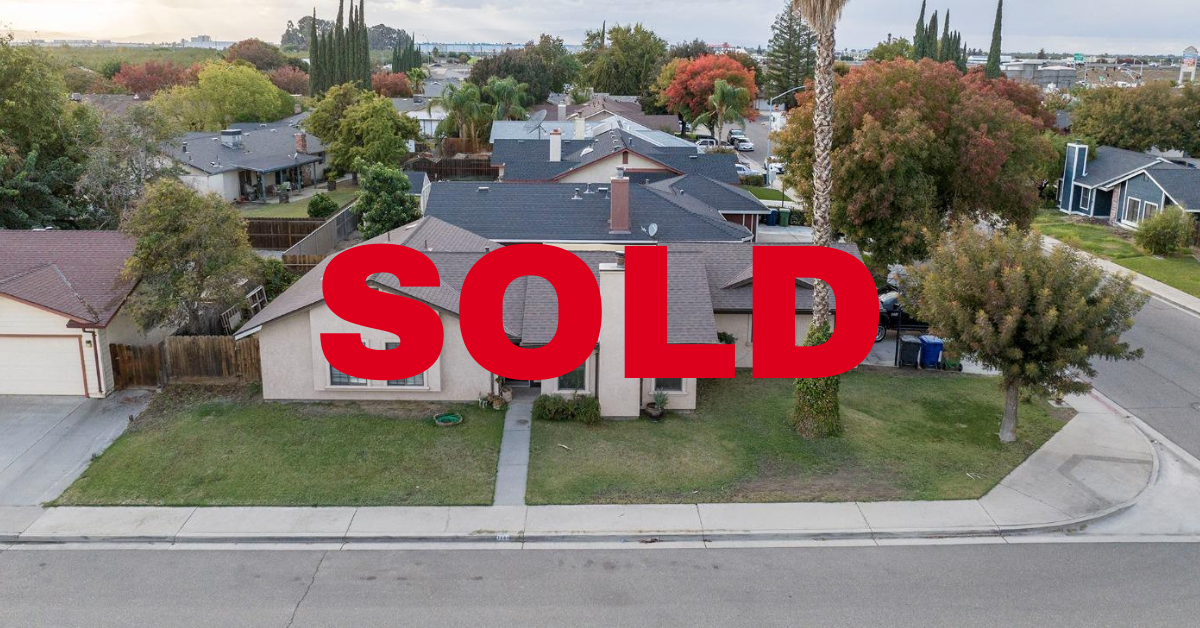
SOLD – 1825 Westminster Ln, Turlock
Welcome to 1825 Westminster. This charming Turlock home situated on .24 acres provides RV parking and a 3 car garage. The 2235 square foot one story floor plan has 4 bedrooms (2 large with outside access) and 2 baths. Cathedral ceilings, living and family rooms, fireplace, inside laundry, central vac system and much more will delight the new owner. There are many fruit trees, a garden area, water fountain and a storage shed displayed in the peaceful backyard.
Tips for Selling Your Home in the Fall and Winter
Show Buyers What It Looks Like During the Spring and Summer
Get 5-Star Curb Appeal to Enhance the Outdoor Experience
Let There Be Light
Spend Time on Basic Home Maintenance
Deep Clean: A Few Places You Might Forget About
Paint? Maybe.
Embrace Hygge
Be Sensitive to Seasonal Decor
Maintain Cleanliness Between Showings
Source: hgtv.com ~ By: Emily Fazio ~ Image: Canva Pro
When Will Interest Rates Go Down?
Mortgage rates have been consistently on the rise as the Fed struggles to battle inflation.
With a recession looming in the distance, you might ask yourself: “Is now the right time to buy a house?”
It’s an understandable question considering how inflation has soared, house prices are high, and mortgage rates keep rising in response. No one wants to make a wrong financial decision.
But it might not be a bad financial decision to buy a house right now. Let’s talk through mortgage rates, how they work, and whether or not today is the right time to buy a home, given the state of the market.
Forecasting mortgage interest rates explained
Mortgage interest rates are changing daily.
It used to be that banks would set the mortgage rates for the day, and then change them the next day, or week, or month, depending on the climate at the time.
Unfortunately, it doesn’t work like that anymore. Wall Street is heavily involved in setting mortgage rates because people buy and sell mortgage-backed securities.
When these securities go up, the mortgage rates go down, and conversely, when the securities go down, mortgage rates go up.
The Fed steps in to help regulate this by buying a portion of the securities and helping to set the rates.
What are the experts saying about mortgage rates now?
According to both Morningstar and Kiplinger, mortgage rates are nearing their peak.
While the rates are still increasing steeply, both reporting agencies believe that since the feds are selling their mortgage-backed securities, they will begin to come down.
Not every expert is sure, however.
Len Kiefer, the deputy chief economist at Freddie Mac, said with the market as volatile as it is, “It is difficult to foresee how future expectations may shift in response to events, so the direction and magnitude of impact are impossible to predict.”
He doesn’t want us to get our hopes up about changing rates.
No one indeed expected the pandemic, and it drastically changed everyone’s financial situation—primarily where the housing market is concerned. Experts are now hesitant to make any sort of a prediction in response.
Are rates expected to go down before the end of the year?
Unfortunately, rates are not likely to go down by the end of the year.
The Fed’s main priority right now is curbing inflation. They do this by hiking reserves. With three more meetings this year, it’s likely that the feds will hike the reserves more steeply again.
These hikes negatively impact low-interest rates. We’re likely to see mortgage rates trend upwards throughout the end of 2022.
Will interest rates go down in 2023?
The Feds are now focusing on lowering the mortgage rate to two percent. They’re expected to hit that number sometime in 2023.
After that, we’ll likely see mortgage rates decrease and continue to fall in 2024 and 2025 as we reach economic stability.
Should I buy a home now or wait?
While interest rates might be high, the real estate market is slowing down.
House-bidding wars are becoming less common than they were, even a few months ago, and houses are staying on the market longer. When the real estate market slows down, it’s usually a better time to buy.
Experts suggest continuing to look for a home but only bidding on the asking price and locking into a reasonable mortgage rate.
You can always refinance down the line if mortgage rates drop to historical lows again. But you’re locked into a better rate if they continue to rise.
If you wait to see if the mortgage rates fall, you might find yourself looking at higher home prices than we currently have. It’s a tradeoff, but there are never going to be perfect market conditions in which to buy a home.
What do these rates mean for refinancing?
This answer will vary by the homeowner and depend on how high your current mortgage is.
Experts often say it’s best to refinance your home when you can reduce interest by at least .75 points to make the refinance worth it. If you can’t, you may find that you’ll pay more in fees than you would save with a new rate.
If mortgage rates are around 5.50% and your mortgage is above 6.25%, refinance is a good idea. If it’s lower than that, you should hold off and see if interest rates will go down in 2023.
Don’t just consider 30-year mortgages. Look into 15-year mortgages as well. These tend to have lower interest rates. The tradeoff is that you might end up with a higher payment. But the money saved could be worth it in the long term.
Home.com can help you navigate the market
Buying a home might be the right decision for you and your family.
Sometimes it’s about finding the right property to fit your needs, instead of looking around at the optimal financial decisions.
The bottom line is that it’s not a bad time to purchase or refinance.
Keep an eye on Home.com’s mortgage rates page to help you decide if it’s the right time to make a move. We also have excellent calculators to help you determine your mortgage costs or calculate a refinance.
When you’re ready to take the next step in purchasing or refinancing, reach out to the experienced loan officers at Homefinity. They’ve been through every market condition and can help guide you to the right decisions for your financial situation.
Source: home.com ~ By:
How to Build Out Your Smart Home
The possibilities are endless when it comes to building out a smart home, which can make decisions overwhelming. Tech expert Brandon Doyle breaks down how to get started.
I’ve tested hundreds of smart-home products over the years and provided written and video comparisons in each product category. Along the way, I’ve learned a lot about what’s needed and what’s not, what the top brands are, and where to get started.
(And big thanks to my wife for her unending patience as I tinkered with, traded, installed, and uninstalled, and upgraded our various smart-home features.)
Opt for Quality Over Price
The options are endless when it comes to smart-home features, but that doesn’t necessarily mean a cheaper product will be better. In many cases, the cheaper off-brand products you might find may not perform as well and can lead to headaches down the line. I recommend watching for package deals and deep discounts from trusted brands on popular sale days like Prime Day and Black Friday.
Pick Your Ecosystem
You’ve probably heard of Amazon’s Alexa, Google’s Home, Nest and Assistant, and Samsung’s SmartThings. These ecosystems act as the brain that ties all of your products together and creates automation. There are a lot of other options out there, from advanced do-it-yourself platforms that are perfect for the tinkering types to professionally installed systems that are typically found in luxury homes.
Great content that focuses on DIY systems such as the Home Assistant control system is abundant on YouTube. However, proceed with caution. I’ve found that unless smart-home tech is your hobby, DIY isn’t always the best choice if you’re looking to save time. And while systems like Crestron, Control4, Savant and Elan have incredible capabilities, setup does require a professional, which can start at around $20,000.
Most people opt to build a system themselves using an already established system like Alexa, Assistant or Apple’s HomeKit. The good news is that no matter the platform you choose, they’re all great. I invested in the Amazon ecosystem and tend to purchase devices that work well with that platform; however, I do have experience using Google’s, including its Nest products—in fact, I use a Samsung phone, so I had to borrow my wife’s iPhone anytime we tested products that use HomeKit.
The key to a synced ecosystem is to ensure you choose products that work well with the brand. Some products, such as Lutron’s Caseta dimmer switches, will work well across all platforms. Other product categories, however—particularly security cameras and doorbells—won’t integrate properly or will lack features if used across platforms.
I love that video from my Ring doorbell automatically displays on my Amazon Echo Show devices and Fire TVs, but unfortunately, it doesn’t do so on a Google Home Hub, Chromecast or Apple TV. Those who are all-in on Google or Apple use a single app to access all the features of a product, whereas, with my Amazon setup, I control some products through the Alexa app but require additional apps for lighting and shades and for the thermostat, doorbell, security system and locks.
Once you’ve determined which platform you’re going to use, it is best to try to work within that ecosystem.
Choose a Robust Home Network
When I first got into smart-home technology, I mainly purchased devices that connected directly to my Wi-Fi network, but I quickly realized that my router couldn’t handle that many devices at once. I routinely had problems like light switches dropping off the network. I ended up spending more money to upgrade the router, and when my wife and I moved, I decided to add a hub and bridge for certain devices such as switches, lightbulbs, and sensors.
If you’re just getting set up in your home or you’re planning to add several devices, it is important to start with a strong network. If you’re still using a router provided by your internet service provider, consider replacing it. I recommend using a mesh system router such as Eero or Google Wi-Fi. You might spend a few hundred dollars upfront, but you’ll save by not having to rent a similar system from your ISP.
Start Small to Avoid Being Overwhelmed
I’m often messaged by new-home buyers who are super excited to add smart features to their homes, but they don’t know where to start or lack the funds to buy everything they want. I advise them that building a smart home doesn’t have to break the bank. Homeowners can get started for around $200, which could get you a smart speaker with a voice assistant and a switch, lightbulb, thermostat or smart lock.
I recommend starting small and then adding room by room as the budget allows. Smart thermostats will pay for themselves with reduced energy costs, while smart locks and doorbells add security and peace of mind. An average smart home can cost around $2,000. That price point buys hubs, voice assistants, security, lighting, comfort, convenience and entertainment products. Companies like Wyze and Eufy often offer affordable systems. You might also opt to focus on a specific aspect of your home—safety features or lighting, for instance—to invest in first.
Security Features
One of the biggest reasons homeowners purchase smart-home products is to monitor their homes remotely, using devices such as smart locks, video doorbells, security cameras and systems. With interconnected devices and an internet connection, you can view and control your home from anywhere in the world on your smartphone.
Smart Lighting
My favorite category of smart-home technology is lighting. The variety is vast. Smart switches, bulbs and light strips can be controlled remotely, by voice, or in automation. The average smart switch costs around $50, and bulbs range from $10 to $60 each, so this is an area that can add up if you decide to do your entire home, but I find it’s well worth the cost.
Robot Vacuums
Robot vacuums have come a long way since the original Roomba was introduced in 2002. They can now intelligently map your home, mop as they go, and even empty their own bins. I’m a big fan of the Roborock lineup; we’ve got a Corgi at home that sheds quite a bit, so it’s nice having the vacuum run on a schedule. Wyze offers a robot vacuum with lidar, which uses a sensor to avoid collisions, for only $250, and Roborock’s Q5+ starts at $700.
Smart Speakers
I love having smart speakers all around our house. We use them to control the lights, check the weather, settle debates by asking them questions, and, of course, listen to ’80s rock, the greatest music of all time. When I’m in my office or watching TV and the doorbell rings, I can see who it is and decide if I need to sign for a package or hide from a door-to-door salesperson—that is, unless they’ve got Girl Scout cookies.
Without my smart speakers, I’d be forced to pull out my phone (that wasn’t already in my hand) and look at the doorbell app, or—God forbid—get up and answer the door without knowing who it is first.
Overall, building out a smart home takes a little research, some time, and a bit of money, but the upgrades, safety, and convenience make it all worthwhile, as I’ve found through my years of testing. I hope you’ve found these experiences helpful, and if you want to learn more, be sure to check out the rest of the Ultimate Smart Home series.
Source: magazine.realtor ~ by Brandon Doyle ~ Image: Canva Pro
SOLD – 3301 Dakota Avenue Modesto
3301 Dakota Avenue Modesto, CA, 95358 Almond Ranch in Wood Colony. Hart-Ransom School Districts. Currently shipping to Blue Diamond with Contract of Approx. 18.5 Planted Acres. Private parcel with Easement Dirt Driveway. Perfect for Private Estate Building Site. Flood irrigation provided by MID (Modesto Water Irrigation). Varieties are Non-Pariel-50%, Wood Colony-25%, Carmel-25%. Trees Planted in 1993. Over 1400sf Older Home that’s currently rented, $900 monthly contract. Multiple Storage Buildings. Great Soil, Minutes off Highway 99, Perfect for a Small Business. Over 20 Acres, you might be able to have 2 homes on this parcel. A Must See!