Aspiring homeowners experienced a lot of challenges in 2023. Elevated interest rates, eye-watering home prices, and abysmal housing stock resulted in inflated costs that stymied buyers. While experts say the housing market should see some easing in 2024, don’t expect much.
If you plan to dive into the housing market in 2024, you’ll need to plan strategically to outpace the competition and attain a home that meets your preferences and goals.
Forbes Advisor spoke with 12 top industry experts to weigh in on what hopeful buyers should do as they pursue homeownership in 2024.
1. Watch Interest Rate Trends To Get the Best Mortgage Rate in 2024
Mortgage rates are steadily declining after flirting with 8% in late October. Most housing market experts agree that rates will trend down further in 2024 but remain elevated.
Nonetheless, rates can jump around quickly, and even a fraction of a percentage point change can impact the cost of a monthly mortgage payment.
Given this, Michael Merritt, senior vice president of mortgage servicing at BOK Financial, advises buyers to monitor the news and the Federal Reserve’s interest rate decisions to stay on top of trends.
Merritt explains that keeping an eye on the Fed’s monetary policy moves can give borrowers a heads-up for where mortgage rates will go in 2024, as the central bank’s policy rate actions tend to impact mortgage rate movements indirectly.
“It’s hard to forecast rates in a volatile market, but most indicators predict lower rates by the end of 2024,” Merritt says.
Pro Tip
Bonus Advice: “The first step in getting the best mortgage is understanding what you want to achieve. The best mortgage product might be different for a purchase than a refinance or for a home you plan to own five years versus 10 years.” — Michael Merritt, senior vice president of mortgage servicing at BOK Financial
2. Attend Local Real Estate Investor Meetings
The housing market remains competitive mostly due to historically low inventory. However, house hunters can stay ahead by using less conventional methods to track down available homes—especially those that buyers won’t find in traditional listings.
Rick Sharga, founder and CEO of CJ Patrick Company, a market intelligence and business advisory firm, suggests attending real estate investor meetings in areas where you’re interested in buying.
“Almost every city or county across the country has investor groups made up of people who are more or less your neighbors,” Sharga says. “A lot of these investors fix and flip properties and might be willing to give a buyer a little bit of a break if they can save the investor the time and money involved in marketing the property.”
Pro Tip
Bonus Advice: “Focus on homeowners who need to sell, not on homeowners who might want to sell. About 70% of homeowners with a mortgage have an interest rate of 4% or lower and just aren’t going to put their home up for sale unless they have to.” — Rick Sharga, founder and CEO of CJ Patrick Company
3. Investigate Expired or Withdrawn House Listings
Blake Blahut, a broker associate and real estate agent at Realty ONE Group Inspiration in Florida, offers a unique tactic to uncover unidentified for-sale homes—asking real estate agents to scour local neighborhoods for expired or withdrawn listings.
“They can also do mailers or door-knocking in those same areas in the hope of finding someone that is looking to sell,” Blahut says. “In a market with unique challenges, it’ll sometimes require a unique method to overcome them.”
Pro Tip
Bonus Advice: “Be patient and start your search early. … [B]eginning your search at least 75 to 90 days before your lease ends or you need to move would take a lot of unnecessary pressure off [you].” — Blake Blahut, broker associate and real estate agent at Realty ONE Group Inspiration
4. Consider an Adjustable-Rate Mortgage (ARM)
Hybrid ARMs are mortgages that start with a low fixed interest rate and change to a variable rate at the end of the fixed term. For example, a 5/1 ARM has a low fixed rate for five years, and then the rate resets once a year until the end of the loan term. Each rate adjustment could move higher or lower.
While ARMs gained a bad reputation due to their role in the 2008 housing crisis, they’re considered less risky now due to higher lending standards. Mark Fleming, chief economist at First American Financial Corporation, suggests an ARM can be a good fit for some people.
“While we are all familiar with the 30-year fixed-rate mortgage, remember that we rarely live in one home for 30 years,” Fleming says. “Why pay for the privilege of fixing the rate for 30 years when you’re likely not going to use it? And you get an affordability boost now when you need it.”
Pro Tip
Bonus Advice: “They say to date the rate and marry the house because you can refinance later. But beware, that [assumes] the rate will be lower in the future and there are costs associated with refinancing—it’s not free.” — Mark Fleming, chief economist at First American Financial Corporation
5. Don’t Wait Until Spring to House Hunt
Spring can be a busy time for the housing market, as listings often climb when the weather warms up.
Louis Gordon, a broker at Century 21 Revolution in Massachusetts, says to get out there early in the year before the temperature—and home prices—start rising.
“The best deals are usually found in winter when inventory is limited and sellers are more desperate to get a deal done,” Gordon says. While on the hunt, Gordon advises you to keep your eyes open for homes already a few weeks on the market and need a little TLC.
“Those sellers are more willing to negotiate on price and terms, like offering a rate buydown,” he says.
Pro Tip
Bonus Advice: “[D]on’t wait until the rates come down. If the rates go back into the 6’s or 5’s, the prices will shoot up like they did in 2021 and early 2022.” — Louis Gordon, a broker at Century 21 Revolution
6. Review Your ‘Must-Haves’ Before Home Shopping
As you embark on your house-hunting journey, Bob Driscoll, senior vice president and director of residential lending at Rockland Trust Bank, advises buyers first to take stock of the home features most essential to them.
“Not every house will become a home to everyone—something that one person may consider a need, like a yard for a pet, could be a want for someone else.”
Though you understandably want to keep costs down, Driscoll says buying a home because it’s affordable is not the best approach.
“For example, if hosting large gatherings is a priority for a certain home buyer, they shouldn’t let the frustrating market pressure them into settling for a home without the space needed to accommodate those activities,” Driscoll says.
Ultimately, homeownership is a major purchase that is as much a financial investment as it is about investing in a home that aligns with your priorities and values.
Pro Tip
Bonus Advice: “Instead of focusing on external factors beyond their control in 2024, prospective buyers should be focusing on their personal timelines, goals, and desires.” — Bob Driscoll, senior vice president and director of residential lending at Rockland Trust Bank
7. Research New Construction Options
With resale housing stock hovering at historic lows—and expected to remain there for the foreseeable future—Nick Bailey, president and CEO of RE/MAX, says buyers should consider researching new construction homes.
“Given such low supply and demand softening, builders have returned to offering competitive mortgage rates through their partner lenders and offering builder incentives and complimentary upgrades to entice buyers,” Bailey says.
Moreover, between October 2022 and 2023, the national median price of new homes dropped over 17%, maintaining a narrow enough gap between new home prices and existing home prices that could prove attractive to some buyers.
Bailey points out that buyers should also consider building a new custom home, which you can finance with a construction loan.
“With the crazy lack of inventory still causing headaches in the market, building a home becomes an attractive option, and with spec homes and semi-custom-building options, it’s easier than most consumers think,” Bailey says.
Pro Tip
Bonus Advice: “I wouldn’t write off older or outdated homes and would encourage buyers to picture what something could look like. For (sometimes) simple repairs and few upgrades, you could turn a house with potential into the house of your dreams.” — Nick Bailey, president and CEO of Re/Max
8. Shop for Homes Outside City Centers
If your dream is to live in a place that offers plenty of culture, sports, entertainment, and dining options, but the housing prices and cost of living exceed your budget, Danielle Hale, chief economist at Realtor.com, advises you to look outside city centers.
“Buyers will generally find that they get more value for their dollar further away from city centers, so shoppers with flexibility should consider expanding the geography of their home search,” Hale says.
For example, if you want to put down roots in the Los Angeles metro area where the median home price was $1,159,000 in October 2023, according to Realtor.com data, consider expanding your search to Riverside, where the median home price during the same period was $580,000.
Pro Tip
Bonus Advice: “No matter how buyers decide to compete, it’s important to make sure that they understand the terms and implications of waiving contingencies, which may be more likely to help them win the bid but may put them on the hook for more financial risk.” — Danielle Hale, chief economist at Realtor.com
9. Pre-qualify Yourself
Before becoming attached to a home that requires a loan you can’t afford, Keith Gumbinger, vice president at mortgage website HSH.com, encourages prospective buyers to determine their income and debt loads ahead of time to get a sense of how much financing they qualify for.
“Borrowers should pre-qualify themselves at a few different interest rates to see whether or not a rate that is likely to appear in the next year is sufficient to allow them to participate in their housing market,” Gumbinger says.
Plugging various rates into a mortgage prequalification calculator can help borrowers determine their maximum loan amount.
Pro Tip
Bonus Advice: “[B]e both opportunistic and flexible. A great house that checks 80% of the boxes and is available at a price you can afford with a mortgage rate that works well enough is likely to be better than waiting for a 100% match.” — Keith Gumbinger, vice president at mortgage website HSH.com
10. Look Into House Hacking
High mortgage rates and house prices may keep homeownership out of reach for some would-be buyers in 2024.
If that’s the case for you, Sherry Chen, a real estate agent with Kappel Realty Group at Compass in California, says house hacking could be the answer.
For instance, Chen says you could buy a four-bedroom house and rent out the other three rooms. She also suggests buying a home with an accessory dwelling unit, or ADU, to generate rental income.
“These strategies can oftentimes cut your mortgage in half or even allow you to live for free,” Chen says.
Pro Tip
Bonus Advice: “Get a fully underwritten preapproval.” — Sherry Chen, real estate agent with Kappel Realty Group at Compass
11. Be Prepared To Bid Over Asking Price
Though bidding wars are less common than they were a few years ago, demand will likely continue to outpace supply, and borrowers will still face plenty of competition in the coming year.
Consequently, Glenn Brunker, president of Ally Home, says to expect to make offers a little over the asking price to improve your chances of landing a home in 2024.
“You may be competing with buyers that have more cash to put towards a house, but if you have a plan in place and know your budget, you’ll be better equipped to make a decision that you’re comfortable with, ” Brunker says.
Pro Tip
Bonus Advice: “Buyers must do their homework in advance by researching lenders and securing a preapproval so you have a competitive advantage when making offers.” — Glenn Brunker, president of Ally Home
12. Build Your Home Buying Team Early
Shopping for a home can be an overwhelming experience, especially for first-time home buyers. To minimize the stress, Cerita Battles, managing director, and head of community and affordable lending at JPMorgan Chase, recommends assembling your team sooner rather than later.
“You don’t have to go through the home-buying process alone—in fact, it’s best to get help very early in the process,” Battles says. She advises buyers to prioritize working with a lending advisor team “because they can help you navigate the home-buying process, with everything from considering homeownership to walking through your new front door to getting connected with a reputable real estate agent.”
Battles also says a trusted lender can guide you through the current rate environment, and educate you on loan products, terms, and fees.
Pro Tip
Bonus Advice: “It’s important to keep in mind that this will be your first home! Even if it lacks some bells and whistles, you can still add more features in the future or use the property as a stepping stone for your dream home.” — Cerita Battles, managing director, head of community and affordable lending at JPMorgan Chase
How To Prepare for Your 2024 Home-Buying Journey
Perhaps the first bit of advice that most housing experts offer hopeful buyers is to confirm you can afford this big step.
“[M]ake sure your financial house is in order and that you’ve factored in all of the costs associated with homeownership beyond a mortgage, like insurance, maintenance, and HOA fees,” Merritt says.
Using a home affordability calculator prior to beginning your search can help you determine a home price range based on your income, debts, mortgage rate, desired loan term, and down payment capability.
Taking these preparatory steps will also improve your borrowing strength, reduce stress, and keep you a few steps ahead of the competition in this fast-moving market:
-
- Create a realistic housing budget that considers all monthly costs
- Boost your credit score to help secure a lower mortgage rate and better loan terms
- Lower your debt-to-income (DTI) ratio to increase borrowing power
- Set aside savings for a down payment
- Research and compare loan products
- Look into down payment assistance programs in the state where you plan to buy
- Gather financial and personal documents lenders require for your mortgage application
- Explore different neighborhoods in person to optimize your time when you’re ready to check out homes
- Get to know the local real estate agents
Experts Reveal How To Get the Best Mortgage Rate in 2024
Qualifying for the most competitive mortgage rate requires a multi-pronged approach.
Besides keeping on top of mortgage rate trends, here are some other essential actions experts advise you to take to increase your chances of locking in a solid mortgage rate:
-
- Save for a larger down payment. “Remember: the higher your down payment, the more likely that you’ll be approved for the loan, the less likely you’ll need to get a loan with mortgage insurance, and the lower your monthly payment will be,” Sharga says.
- Boost your credit score. “There are dozens of factors that influence a borrower’s mortgage interest rate, and credit score is one of the most important,” Chen says.
- Shop multiple lenders. “Today’s market is very challenging for mortgage companies who are all hungry for business,” Sharga explains. “[T]hat’s a perfect environment for a consumer to do comparison shopping in.”
- Strategize and consider points. Blahut advises buyers to budget for mortgage points or to “strategize with their trusted real estate professional” and figure out how to get the seller to contribute closing concessions.
- Determine the best loan product for your situation. “Discussion about rates typically focuses on the 30-year fixed rate,” Bailey says. However, the average homeowner lives in their home for eight years, so Bailey suggests buyers weigh all their lending options, including ARMs.
Source: Forbes.com ~ By Robin Rothstein ~ Image: Canva Pro




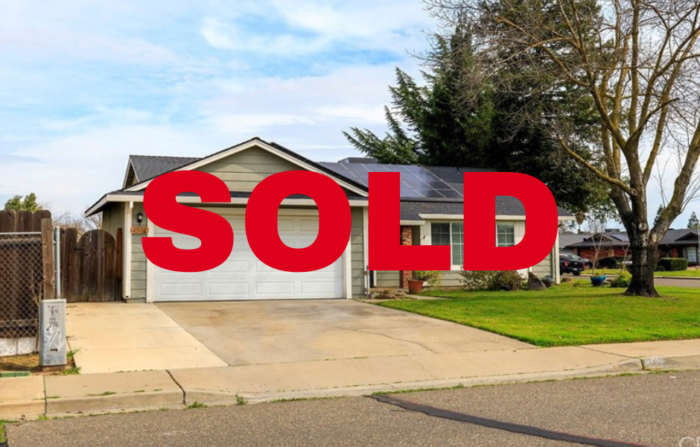 Great Starter Home!! Corner Lot with an Attractive Home. Over 1300sf with 3 Bedrooms and 2 full baths. Newer Roof, Newer Exterior/Interior Paint, Newer Flooring, Newer Fixtures, Fresh Landscaping, and Ready to Move Into. Solar Power System is Leased. Inside Laundry. 2 Car Garage. A Must See!